
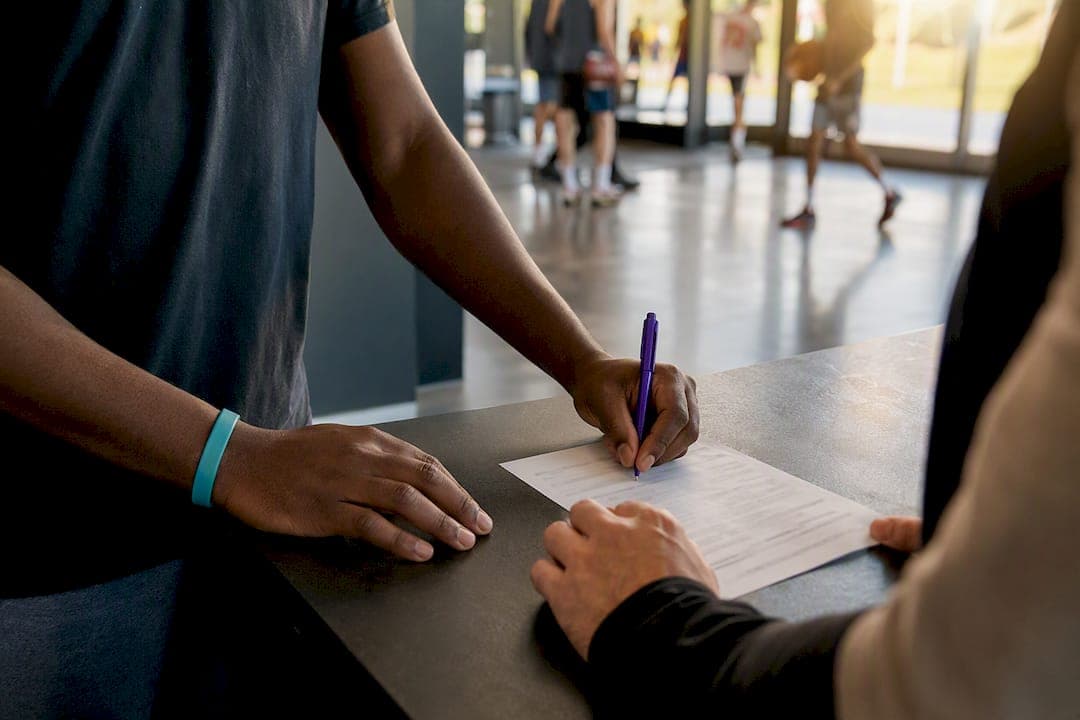
Yes, use a pickup game waiver as part of basic risk management, but don't treat it as a legal force field. A well-written waiver holds up for ordinary negligence claims, the everyday bumps and sprains that come with playing sports, but it won't shield an organizer who ignores a broken rim or lets someone play with a known concussion, pair the waiver with real safety habits and enough insurance to cover the gap it leaves.
TL;DR:
- A pickup game waiver releases organizers from claims of ordinary negligence but does not protect against gross negligence or intentional harm.
- Clear, specific language about risks and liability release, along with signed consent before activity starts, is crucial for enforceability.
- Using electronic signatures, timestamped records, and linking waivers to rosters improves signatures' validity and reduces enforcement issues.
- A comprehensive safety routine includes equipment checks, venue insurance confirmation, incident reporting, and clear policies, alongside the waiver.
- Roster management tools that attach waiver status directly to players streamline compliance and prevent missed signatures, reducing legal and logistical risks.
Table of Contents
- What Is a Pickup Game Waiver and When Do You Need One?
- What to Include: The Four Pillars of a Pickup Game Waiver
- What Are the Legal Limits on Sports Waivers?
- How Do You Collect and Store Signed Waivers?
- What Does a Sample Waiver Look Like, and Where Can You Get One?
- What Policies Should Organizers Pair With a Waiver?
- An Organizer's Take on Making Waivers Actually Work
- How Roster Sports Keeps Waiver Status Attached to Your Roster
- Sources
- FAQ
What Is a Pickup Game Waiver and When Do You Need One?
A pickup game waiver is a short legal document where a participant acknowledges the risks of playing and agrees not to sue the organizer for injuries that happen through ordinary negligence. You'll also see it called a release of liability, an assumption of risk form, or a sports liability waiver. The legal function is the same across names: the player accepts that pickup basketball, volleyball, soccer, or flag football carries real physical risk, and signs away the right to bring a claim over the kind of harm that risk naturally produces.
Organizers reach for this document in three common situations:
- A one-off pickup run at a public gym or park where players are largely strangers to each other.
- A recurring weekly series with the same core group, where a single waiver can cover a whole season.
- A semi-organized informal league with standings or brackets but no formal club structure behind it.
What it cannot do matters just as much as what it does. A waiver doesn't erase gross negligence, doesn't protect against intentional harm, and doesn't override state laws that limit or void these releases for certain recreational activities. Enforceability shifts from state to state, so a form that works cleanly in one jurisdiction might get challenged in another.
What to Include: The Four Pillars of a Pickup Game Waiver
Courts look for specific language when they decide whether to enforce a release. Skip one of these pillars and you weaken the whole document.
- Assumption of risk. Spell out the sport-specific dangers a reasonable player should expect: collisions, falls, sprains, concussions, contact with other players or equipment. Vague language like "assumes all risks of the activity" is far weaker than naming concussions and joint injuries directly.
- Release of liability. This is the core sentence releasing the organizer, venue, and any co-organizers from claims tied to ordinary negligence. Keep it in plain, conspicuous language rather than dense legal phrasing buried in a paragraph of boilerplate.
- Indemnification. This clause makes a participant financially responsible if their own actions cause damage or injury to someone else, protecting the organizer from getting pulled into a dispute between two players.
- Emergency medical consent. A short block authorizing emergency care and collecting emergency contact information and relevant health conditions, so nobody is scrambling for a next-of-kin number after a bad ankle roll.
A template built around these four elements mirrors the structure used in the University of Wisconsin's assumption of risk and consent form. It lists injury categories from minor to catastrophic and pairs them with hold-harmless and emergency consent language in one document.
Three optional clauses are worth adding depending on your setup: a photo/video release if you post highlights, a recurring-event clause that covers a whole season instead of one game, and a governing-law clause naming the state whose law applies if a dispute ever goes to court.
Pro Tip: Read the risk paragraph out loud before you use it. If it sounds like something a lawyer wrote for a shipping contract instead of a Tuesday night pickup run, rewrite it in language a 16-year-old could follow. Plain language wins in court and gets more people to actually sign without skimming past it.
What Are the Legal Limits on Sports Waivers?
Courts scrutinize exculpatory clauses closely, and they draw a hard line most organizers don't fully appreciate. A release can excuse ordinary negligence, the kind of carelessness that happens in any physical activity, but it typically cannot excuse gross negligence, reckless conduct, or intentional misconduct. If an organizer knows a court has a cracked surface and says nothing, or lets a visibly injured player keep going, no waiver language rescues them from that.

Wording quality changes outcomes. Judges give more weight to waivers that use clear, unambiguous, conspicuous language over ones that hide release terms in fine print or bury them under unrelated clauses. A heading that plainly says "Release of Liability" in bold, sitting above its own signature line, holds up better than the same sentence dropped into paragraph six of a wall of text.
State law adds another layer of unpredictability. Some states restrict pre-injury releases outright or apply special rules to recreational facilities. Maryland, for example, passed legislation clarifying when liability-limiting provisions tied to recreational facility use are void, which shows how quickly the ground can shift under a generic template pulled from another state.
A few practical habits improve your position regardless of jurisdiction:
- Use a standalone signature block, not a signature buried at the bottom of an unrelated page.
- Break the waiver into plain, labeled sections rather than one dense paragraph.
- Keep time-stamped proof of when each person signed, especially for recurring games.
None of this guarantees a waiver survives a challenge. It just makes the document look and function like something a court expects to see, rather than boilerplate copied without a second thought.
How Do You Collect and Store Signed Waivers?
Collect the signature before anyone steps on the court or field, not after. A waiver signed mid-game or after an incident carries far less weight, and in some cases a court may question whether it was even valid at the moment of injury.
Electronic signatures are legally solid for this purpose. The federal ESIGN Act and the state-level Uniform Electronic Transactions Act (UETA) both establish that an e-signature carries the same legal weight as a handwritten one, as long as the signer consented to sign electronically and the record is retrievable later. That's why template providers like LawDepot's activity waiver build eSign workflows directly into their forms, and why services like Waresport's waiver generator produce time-stamped PDFs as part of the signing process.
For storage, a few habits go a long way:
- Save each signed waiver as a date-stamped PDF, not a screenshot or a photo of a paper form.
- Link the waiver record to the specific player's roster entry so you can confirm status at a glance.
- Keep a backup copy somewhere outside your phone, whether that's cloud storage or a shared drive.
Pro Tip: For recurring games, don't make players re-sign every single week. A seasonal waiver with a clear effective-date range, paired with a per-event acknowledgment, covers the whole run while still giving you a paper trail tied to each session.
If someone shows up without a signed waiver on game day, you've got three real options: hold them out until they sign, use a short conditional form on the spot, or document verbal consent as a stopgap while you follow up with the full form later that day.
What Does a Sample Waiver Look Like, and Where Can You Get One?
A workable pickup game waiver breaks down into six modules you can adapt to almost any sport:
- Activity and event details (sport, date, location, organizer name).
- Assumption of risk paragraph naming sport-specific dangers.
- Release of liability for ordinary negligence.
- Indemnification clause.
- Emergency medical consent and contact block.
- Signature block with printed name, date, and signature line.
Basketball and volleyball waivers should call out collisions, falls, and joint injuries. Football and soccer versions need language around contact injuries and concussions specifically, since generic "assumption of risk of the sport" phrasing does less work legally than naming the actual danger.
Several template providers make a starting draft easy to find. LawDepot's activity waiver covers general recreational activities with built-in eSign support. Waresport's free waiver generator is built specifically for sports and release-of-liability use cases. JotForm hosts a pickup football liability waiver template you can customize field by field for other sports.
Every one of these providers says the same thing in their fine print: their templates are a starting point, not a substitute for a lawyer familiar with your state's rules. Treat that warning as accurate rather than boilerplate CYA language.
What Policies Should Organizers Pair With a Waiver?
A waiver is one piece of a layered approach, not the whole strategy. The organizers who avoid trouble combine the paperwork with a handful of unglamorous habits.
- Check equipment and the playing surface before games start, especially at parks and rented gyms where conditions vary week to week.
- Confirm whether the venue's insurance covers pickup activity or whether you need a general liability policy of your own.
- Give any volunteer coaches or referees a quick briefing on incident reporting so nothing gets forgotten by Monday.
- Write down your refund, no-show, and dispute policies alongside the waiver so players know what happens when something goes wrong off the court, not just on it.
Getting your adult rec league started on solid footing usually means building these habits into your very first season rather than bolting them on after a bad experience.
An Organizer's Take on Making Waivers Actually Work
Most waivers fail not because the legal language is weak but because nobody actually signs them. Attach waiver status to your signup process instead of handling it separately, and completion rates go up without any extra chasing on your part. Frame the waiver as a quick safety briefing rather than legal fine print. Four things you can do before your next game: write the four pillars into one page, switch to e-signatures, tie signed status to your roster, and check your venue's insurance coverage this week.
— Daniel
How Roster Sports Keeps Waiver Status Attached to Your Roster
Roster Sports gives organizers something a paper clipboard never could: waiver status that lives right next to each player's name on the roster, instead of in a separate folder you have to cross-check by hand. If you've been juggling a group chat, a spreadsheet, and a stack of signed PDFs, the gap between those three things is exactly where missing waivers slip through.
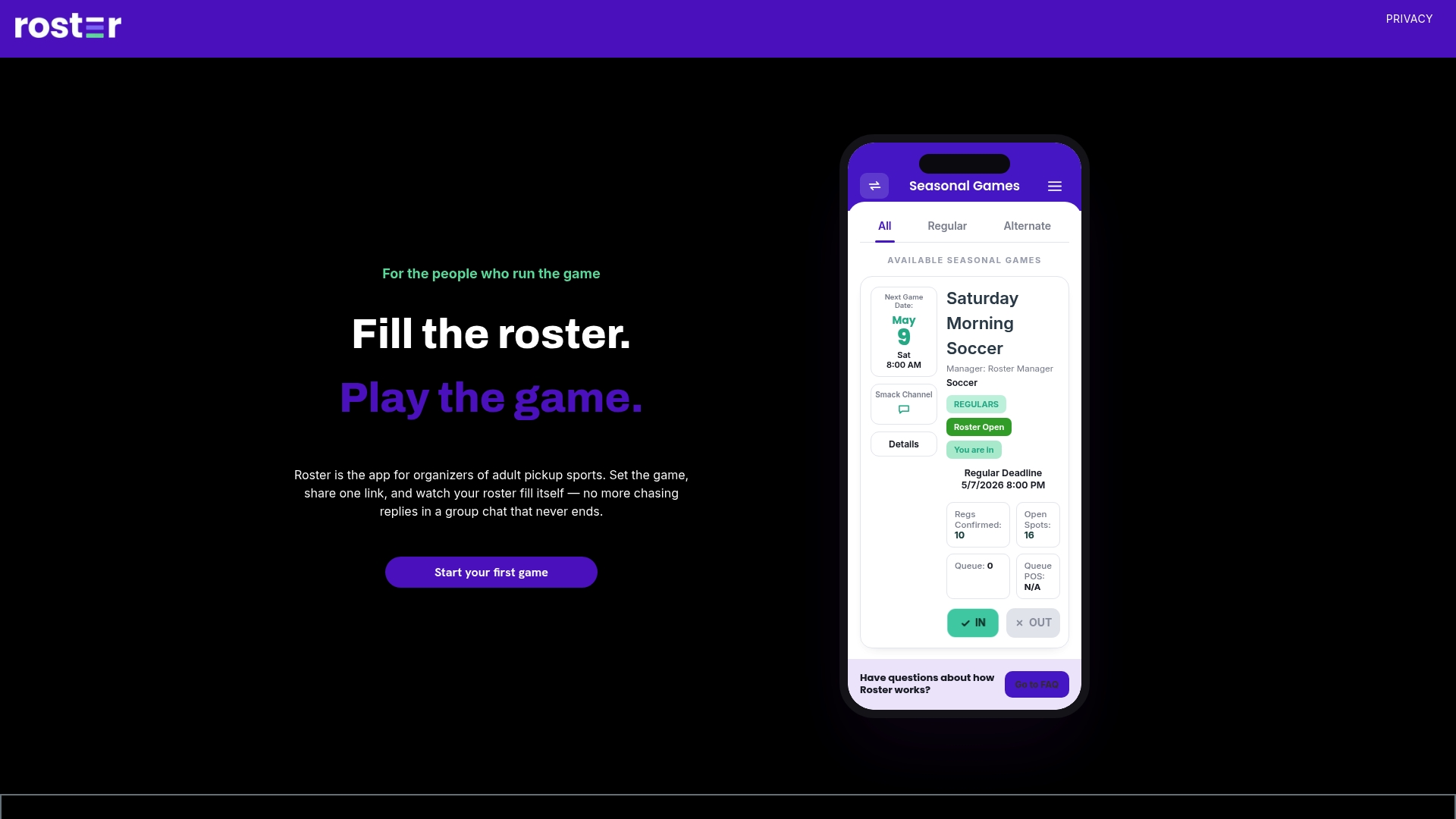
Because the app already tracks who's signed up for each game, alternates included, it can flag waiver status directly on that same player profile and send automatic reminders to anyone who hasn't completed one before the roster locks. That means fewer awkward conversations at check-in, more consistent records if a question ever comes up later, and one less thing on your plate before the game even starts. If you're tired of tracking RSVPs, waiver status, and payments across three different apps, see how Roster Sports handles game management and get your next season set up in minutes.
Sources
- exculpatory clause | Wex | US Law | LII / Legal Information Institute
- Free Liability Waiver Generator | Online Sports Waiver Form & Release of Liability Template — Waresport
- Activity Waiver | LawDepot
FAQ
Do waivers always hold up in court?
No. Courts generally enforce waivers against claims of ordinary negligence but reject them for gross negligence, reckless conduct, or intentional misconduct. Enforceability also depends on the state, since some jurisdictions restrict or void liability-limiting language for certain recreational activities.
What does it mean to play a pickup game?
A pickup game is an informal, unorganized sports session where players show up to compete without a formal league structure, fixed teams, or official referees. It's the format most common in basketball, soccer, and volleyball at public courts, parks, and open gym sessions, and it's exactly the setting where a waiver is easy to overlook because everything feels casual.
Why did my waiver claim not go through?
A waiver claim usually falls apart for one of three reasons: the injury involved gross negligence or reckless conduct that the release never covered, the language was vague or buried in fine print instead of clear and conspicuous, or the signature happened after the injury rather than before play started. Reviewing your state's specific rules on pre-injury releases is the fastest way to spot which one applies to your situation.