
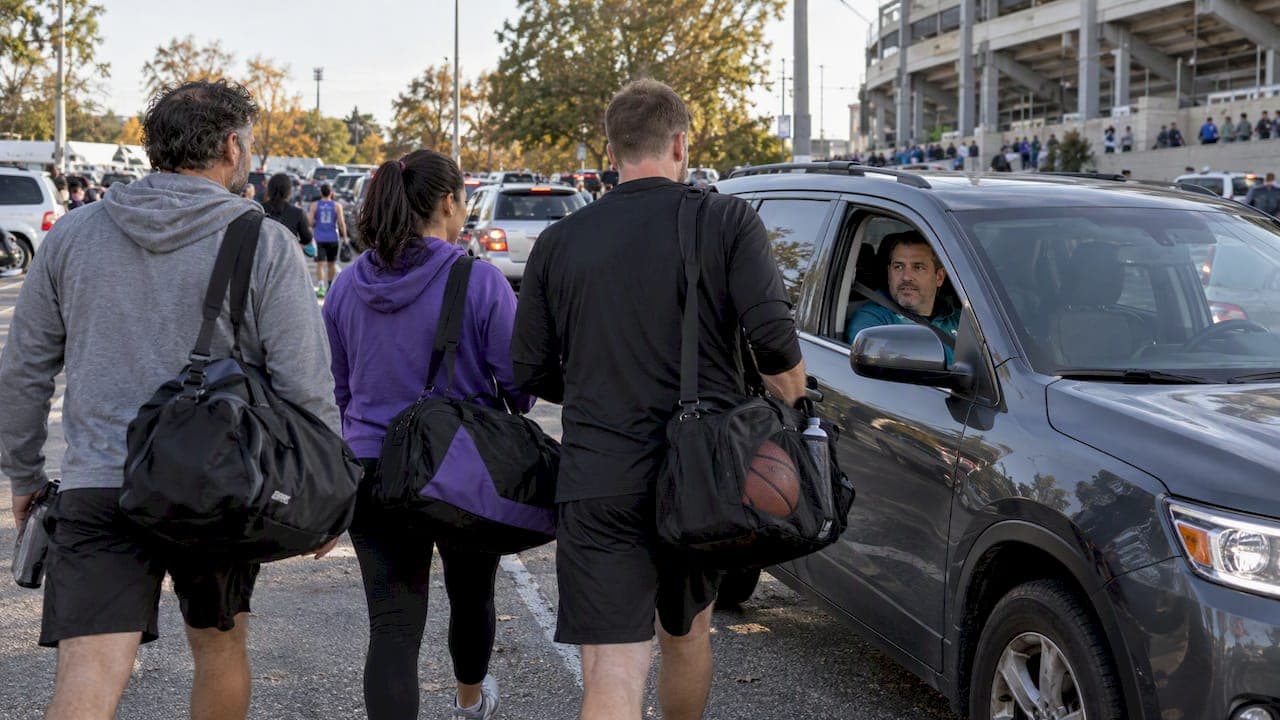
Yes, you can carpool to games, and it works well when you plan around the venue's own rules. Before anything else, pull up the venue's official transportation or parking page to confirm rideshare zones, shuttle schedules, and postgame pickup rules. That five-minute check prevents most of the problems that turn a simple carpool into a scramble.
TL;DR:
- Confirm riders, vehicle capacity, and car seat needs at least two days ahead, then agree on cost sharing and a meetup leader’s phone number.
- At one stadium, walking from the gates to rideshare staging takes roughly 10 minutes, and the last return shuttle leaves about 90 minutes after the game.
- Choose a specific pickup point and backup before kickoff, because crowded exits and changed zones can defeat an informal plan to meet at the car.
- For trips with children, keep a written passenger list, assign an adult to supervise, and share driver and parent contact numbers before departure.
- For recurring carpools, shared signups, waitlists, contact lists, and payment tracking reduce manual coordination, but they cannot override venue pickup rules.
Table of Contents
- Why carpooling to games is worth the planning
- Your step-by-step carpool checklist for game day
- How venue rideshare zones and shuttles shape your pickup plan
- What to confirm for passenger safety, especially with kids
- Car games and etiquette that keep the ride safe
- Organizer tools that cut carpool coordination time
- Three habits that make matchday carpools repeatable
- Roster: an easier way to manage who's riding and who's paying
- FAQ
- Sources
Why carpooling to games is worth the planning
Splitting a drive to a game pays off in ways beyond the obvious. Fewer cars means less money spent on gas and parking, and less time circling a packed lot looking for a spot. Groups that carpool also tend to arrive calmer, since one driver is focused on the road while everyone else handles snacks, directions, or just conversation.
- Fuel and parking costs get split across riders instead of paid by one person per car.
- Fewer vehicles on site means less time hunting for parking near a crowded venue.
- Shared trips cut down on overall traffic and emissions for the event.
- Parents get an extra set of eyes on kids during loading, the drive, and venue walk-ins.
The size of the benefit depends on the event. A small local game with open parking saves less hassle than a packed regional matchup where every spot and every minute matters.
Your step-by-step carpool checklist for game day
A carpool runs smoothly when the plan is set before anyone starts the car. Break it into three phases: before the game, the day of, and the ride home.
- Confirm every rider, vehicle capacity, and any car seat needs at least two days ahead.
- Assign drivers and agree on a payment method for gas or parking costs upfront.
- Share the route, arrival window, and a meetup leader's phone number the morning of the game.
- Send ETA updates in the group chat and stagger arrivals if the lot has limited space.
- Pick a specific postgame pickup spot before kickoff, not after the final whistle.
- Have a backup meeting point ready in case the main pickup zone is closed or crowded.
- Confirm any owed payments once everyone is dropped off.
Pro Tip: Screenshot the venue's parking map and text it to the group before you leave. It saves everyone from guessing which gate or lot to head toward once you arrive.
The postgame step trips up more groups than the drive there. Crowds move slower leaving a stadium than arriving, so a loose "meet at the car" plan often falls apart once thousands of people are funneling through the same exits.
How venue rideshare zones and shuttles shape your pickup plan
Most stadiums route rideshare and carpool pickup through designated zones rather than letting cars idle near the gates. Checking the venue's transportation page before you go tells you exactly where those zones sit and how the flow works on both ends of the game.
- Designated rideshare or pickup zones can be a real walk from the gates. At Mercedes-Benz Stadium, rideshare staging areas sit roughly a 10-minute walk from entry points, and postgame pickup often uses different exits than the ones fans entered through.
- Return shuttles commonly run on a fixed schedule rather than continuously. Mercedes-Benz Stadium notes that last return shuttles depart about 90 minutes after the game ends, so a late exit from the stands can mean missing the last ride.
- Shuttle and reserved parking services aren't always free or unlimited. Treat them as a transportation product with real conditions such as fares, capacity caps, and eligibility rules that vary by event.
- Look specifically for shuttle operating windows, where rideshare vehicles are allowed to stage, and whether parking needs to be reserved ahead of time.
These details change by venue and even by event, which is why the official page, not a general assumption, should drive your plan.
What to confirm for passenger safety, especially with kids
Carpooling with children adds a layer of planning that's easy to skip when you're focused on getting to the game on time. A few confirmations ahead of the drive prevent most safety gaps.
- Confirm car seat requirements and exact passenger counts with every driver before the day of the game.
- Keep a written passenger list so it's clear who rode with whom, and check kids off as they board and exit.
- Assign one adult at the venue to handle supervision responsibilities and make sure phone numbers are exchanged among all drivers and parents.
- Pick a visible, specific meetup point for pickup, plus a backup option like an alternate exit, a set time, or a nearby landmark.
Pro Tip: Take a quick photo of each car and plate before you leave the house. If a pickup spot gets chaotic, that photo makes it much faster for another parent or chaperone to spot the right vehicle.
A written list sounds basic, but it's the fastest way to confirm everyone is accounted for when several cars arrive at a crowded lot at once.

Car games and etiquette that keep the ride safe
The best game-day car games need no equipment and no screen time, which keeps the driver's attention where it belongs. Options like 20 Questions, sports trivia, alphabet spotting (finding letters on signs in order), and collaborative storytelling work well because they're entirely verbal.
- Designate one passenger, not the driver, to lead the game and keep it moving.
- Keep phones and reading material away from the driver's seat for the whole trip.
- Keep music and overall noise at a level where the driver can hear directions and other cars.
- Load gear and tailgate items before pickup starts so the car doesn't sit loading at the curb, following a helpful baseball packing list for players and parents to ensure nothing important is left behind.
- Confirm the return plan out loud before leaving the driveway, not after the game ends.
Organizer tools that cut carpool coordination time
Running a carpool for a single game is manageable with a group chat and a little patience. Coordinating carpools across a season, with rotating drivers, alternates, and payments, is a different problem, and it's where a shared digital tool does more work than a thread full of messages.
- A single shareable signup link lets riders confirm their own spot instead of a manager chasing replies one by one.
- RSVP limits and waitlist tracking automatically fill open seats when someone drops, instead of leaving a car short.
- A passenger contact list kept in one place means no searching old messages for a phone number on game day.
- Built-in payment tracking keeps gas or shuttle cost splits clear without separate reminders.
None of this replaces checking the venue's own transportation rules. These tools organize your people; the stadium still sets the actual pickup and shuttle constraints. For more on keeping a roster full when plans shift last minute, see our guide to handling last-minute dropouts.
Three habits that make matchday carpools repeatable
After organizing enough group rides, three habits consistently prevent the usual last-minute scramble: keep a written passenger list with a photo of each vehicle, collect payment in advance whenever possible, and send one final confirmation message about two hours before kickoff. A single shared link or checklist for the whole group beats a dozen separate texts, since nobody has to guess what's already been confirmed.
— Daniel
Roster: an easier way to manage who's riding and who's paying
If you're already managing a season's worth of pickup games, chasing RSVPs for carpools on top of rosters adds up fast. Some tools can take that admin work off your plate: set the game details once, share a single link, and let players confirm their own spot instead of filling your inbox with replies.
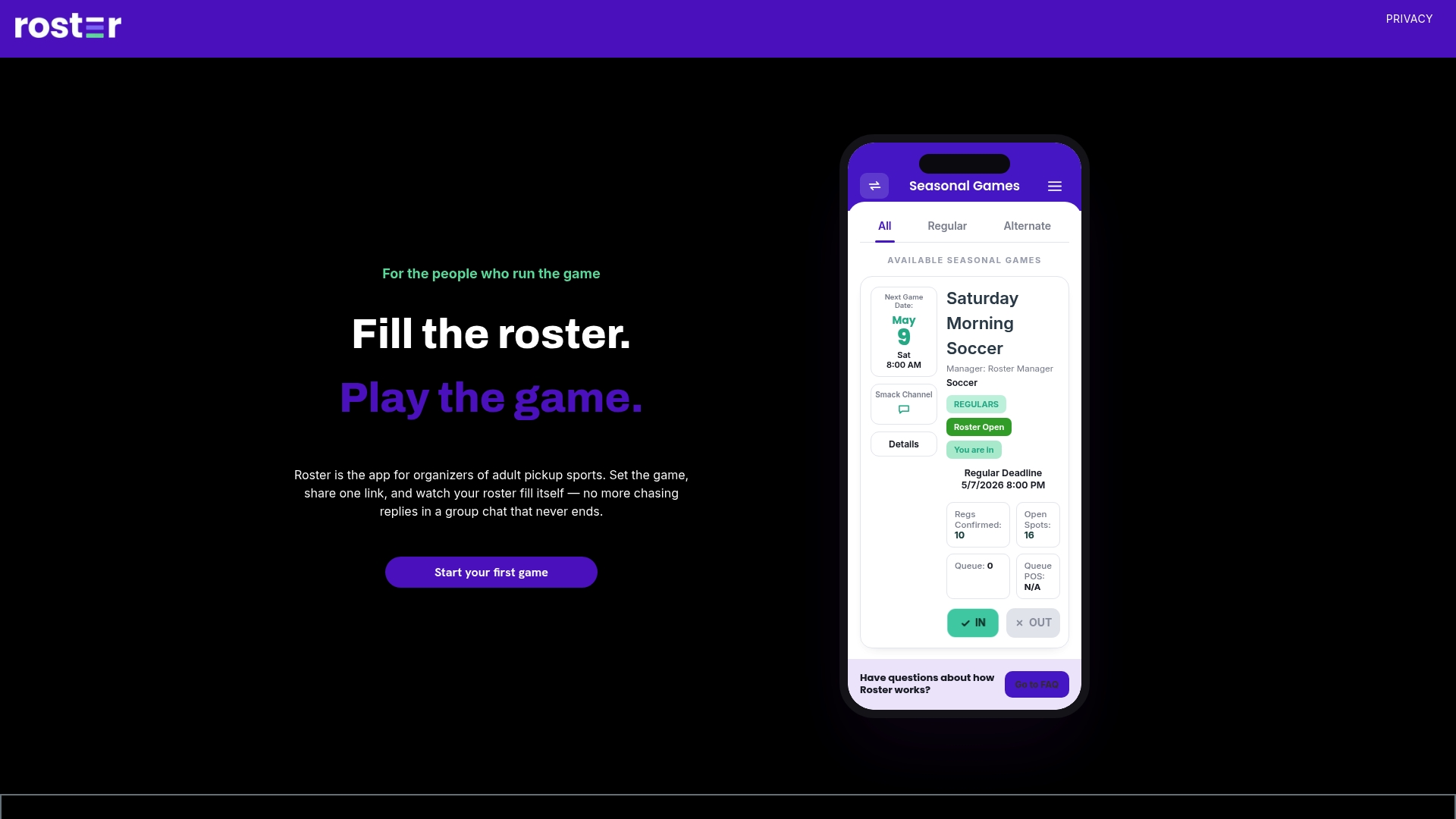
- A shareable link can replace the back-and-forth of a group chat for RSVPs.
- Automated waitlist and alternate tracking can fill open spots without manual spreadsheet management.
- Payment tracking features help keep gas, field, or league fees clear between organizers and players.
Pickup rules at the venue are still set by the venue, but who's coming, who's riding together, and who still owes you money is something we help you handle in one place. Our checklist for prepping a pickup game pairs well with a carpool plan if you want a full game-day template. When you're ready to try it, visit Roster and set up your first game link.
FAQ
What is the carpool app?
A carpool app is any tool that helps a group coordinate shared rides, usually by letting people confirm seats, share routes, or split costs in one place. Some are built for daily commuting, while others, like roster and scheduling tools for sports teams, help organizers coordinate rides alongside the rest of game-day logistics.
What are fun games to do in the car?
Verbal, no-equipment games work best since they don't distract the driver. Twenty Questions, sports trivia, alphabet spotting, and collaborative storytelling are all reliable options for a game-day drive.
Is carpooling illegal in England?
Carpooling itself isn't illegal in England; sharing rides to save on gas or parking is common practice. Rules can apply to charging unrelated passengers for rides in a way that resembles a commercial taxi service, so check current guidance if money changes hands beyond splitting fuel costs.
What is the 20 questions car game?
In 20 Questions, one passenger thinks of a person, place, or thing, and the rest of the car takes turns asking yes-or-no questions to guess it, with a limit of 20 questions total. Whoever guesses correctly gets to pick the next answer, and the game needs no supplies or screens, which makes it a solid fit for a drive to the game.
How do I handle last-minute changes to a carpool?
Keep a backup driver or two in mind before game day so a cancellation doesn't leave riders stranded. A single shared link or group update, rather than separate texts to each person, keeps everyone working from the same confirmed plan.