
The fastest way to grow pickup game attendance is to combine high-visibility social posts with one canonical signup link and a short launch incentive, then back it up with clear game-day roles so people actually come back. Start this week: publish one Instagram Story or Facebook event with your signup link, and offer a small discount for the first ten people who join.
TL;DR:
- Use one event page everywhere, listing location, skill level, cost, and equipment; show attendees for casual games, but hide the list for beginner sessions.
- Limit free or discounted launch offers to two weeks, cap reduced price spots, and track what each new player costs to recruit.
- Send a weekly roundup on Monday, a weather and headcount reminder 48 hours before play, and a same day message with last minute changes.
- Assign separate hosts, timekeepers, safety leads, and beginner liaisons, then check players against the roster and fill cancellations from the waitlist before kickoff.
- Keep the day and time fixed for at least two months, and announce recurring games a week to ten days ahead.
- ✓Share game details with one link
- ✓Track player RSVPs
- ✓Fill open spots in real time
- ✓Create a waitlist for dropouts
Table of Contents
- Use Instagram, Facebook, and Group Chats to Spread the Word
- Kick-Start Attendance With Launch Discounts and Referral Deals
- Centralize Signups With One Event Page and a Clear Link
- Keep Regulars Engaged With a Simple Email Cadence
- Assign Roles, Manage Check-In, and Use Alternates to Cut No-Shows
- [Turn One-Off Games Into a Standing Community](#turn-one-off-games-into-a-standing-communityhttpsonemorcomblog-postgroup-workout-challenges)
- A Checklist Built From Running These Games Week to Week
- Leveraging Local Sports Clubs and Facilities for Promotion
- Using Offline Methods Like Flyers and Posters in Community Centers
- Engaging With Influential Community Members or Local Sports Personalities
- Timing Strategies for Optimal Promotion and Player Turnout
- Incentivizing Player Referrals to Grow Game Attendance
- What Organizers Notice Once Signups Get Easier
- How Roster Handles the Logistics While You Focus on Promotion
- FAQ
- Sources
Use Instagram, Facebook, and Group Chats to Spread the Word
Each platform plays a different role in filling your roster. Instagram Stories and Reels work for quick visibility: a 15-second clip of last week's game with a tappable link and a local hashtag catches people scrolling between tasks. Facebook groups still convert well for recurring games because members can see who else RSVP'd, which nudges fence-sitters to commit. Group chats on WhatsApp or Telegram are best for your regulars: short, scannable updates rather than long paragraphs keep people from muting the thread.
Promotion through social channels has a measurable effect on turnout. A study of a virtual run found that social media promotion correlated strongly with participant interest, with the relationship explaining roughly 69% of the variation in sign-ups. The same research flags WhatsApp and Instagram as the most consistently used channels across age groups for event promotion.
A post that converts usually includes:
- Day, time, and location in the first line
- Skill level and cost so there's no confusion at check-in
- One-line hook ("drop-in pickup, all levels welcome")
- A single signup link, repeated in the caption and the bio
Pro Tip: Post at the same time every week so your regulars know when to expect it, and never bury the signup link in a comment.
Kick-Start Attendance With Launch Discounts and Referral Deals
New games live or die on the first few weeks. A free first session or a steep welcome discount removes the biggest barrier for someone who has never shown up to a stranger's pickup run.
- Offer a free or half-price first game for a limited two-week window
- Add a "bring a buddy" referral discount so your current players do the recruiting
- Use early-bird pricing for the first several signups to create urgency
- Cap how many discounted spots you give out so the incentive doesn't become the expectation
Time-limited free or discounted launches are a common and effective way to seed active rosters quickly, but track what each new player actually costs you to acquire. A discount that never ends isn't a launch tactic anymore, it's just a lower price.
Centralize Signups With One Event Page and a Clear Link
Confusion kills signups faster than lack of interest. Every promotional post, whether on Instagram, Facebook, or in a group chat, should point to the same event page, not three different forms or a text thread buried from last month.
Your event page needs:
- Date, time, and exact location, including entrance details if the venue is tricky to find
- Skill level and cost per player
- Equipment requirements (cleats, own ball, water)
- Accessibility notes if the venue has stairs-only access or limited parking
A single canonical link beats embedding forms on five different platforms because it eliminates the "wait, which link do I use" problem that quietly kills conversions. On attendee visibility, showing who's already signed up tends to boost conversions through social proof, but hiding the list can protect newer or less confident players from feeling judged before they arrive. Default to showing attendees for open, casual games and hide the list for beginner-focused sessions.
Keep Regulars Engaged With a Simple Email Cadence
Email still works for retention, especially for players who've already shown up once and need a nudge to make it a habit. The goal is a predictable rhythm that never feels like spam.
- Monday: a weekly roundup of upcoming games with the signup link front and center
- 48 hours before: a short reminder with weather notes and final headcount
- Day of: a quick check-in message confirming time and any last-minute changes
Segment your list where it matters: regulars get a casual "see you Thursday" tone, occasional players get a reminder of what makes the game worth their time, and waitlisted players get a direct nudge the moment a spot opens. Subject lines that name the day and time ("Thursday 7pm: 3 spots left") tend to outperform vague ones.
Assign Roles, Manage Check-In, and Use Alternates to Cut No-Shows
A game that runs smoothly gets word-of-mouth promotion for free. A game that starts twenty minutes late because nobody knew who had the ball does the opposite.
- Assign a host who owns check-in and starts on time regardless of who's missing
- Name a scorekeeper or timekeeper separate from the host so nobody's juggling both
- Designate a safety lead for basic first aid and injury calls
- Point beginners to a liaison who can explain the rules before kickoff
Digital check-in against your roster lets you spot gaps fast and pull from a waitlist before the first whistle rather than scrambling mid-game. Set a simple fairness rule, like balanced team sizes or rotating subs, and state it in your pre-game message so nobody's surprised.
Pro Tip: Send your fairness rule and start time in the same message as your final headcount, not as a separate announcement.
Turn One-Off Games Into a Standing Community
A pickup game becomes a community when players know it'll be there next week, at the same time, in the same place. Consistent scheduling builds the kind of habit that keeps people coming back even when they'd rather skip one session, because the group holds the identity of "Thursday night soccer," not just a date on a calendar.
- Approach local gyms, rec centers, and sporting goods retailers for cross-promotion, they often have bulletin boards, newsletters, or social accounts that reach exactly your audience
- Offer a simple trade: you promote their space or product, they promote your game to their list
- Keep the day and time fixed for at least two months before changing anything
Community-based organized sport participation builds stronger social ties and better well-being compared with unorganized play, which is worth mentioning when you're pitching partners or recruiting new players. A quick post-game ritual, even just grabbing coffee or sharing photos in the group chat, reinforces that the game is a group to which people belong, not a service they use.
A Checklist Built From Running These Games Week to Week
Before the game: publish one post with your signup link and any launch promo, and confirm your event page has everything a first-timer needs. During the game: run digital check-in, confirm alternates, and fill drops from the waitlist immediately rather than waiting until kickoff. After the game: send a quick follow-up asking for feedback and remind players when the next session is.
- Before: one link, one promo, posted everywhere you promote
- During: check-in against the roster, pull alternates fast
- After: follow-up message and feedback ask within 24 hours
Automated roster tools cut the admin work of chasing RSVPs and manually filling drops, which frees up time for actually running the game. For sport-specific templates, see how organizers run pickup volleyball or manage pickup basketball with a single shared link.
Leveraging Local Sports Clubs and Facilities for Promotion
Local clubs and facilities already have the audience you're trying to reach: people who show up regularly to play, train, or watch. Approach a nearby rec center, YMCA, or sports club about posting your game on their bulletin board, in their newsletter, or on their social accounts. Many facilities run multiple programs and are happy to cross-promote a casual pickup game that fills idle court or field time.
If you rent a facility regularly, ask the front desk or facility manager whether they'll let you leave flyers at the check-in counter or mention your game to members looking for drop-in options. Clubs with competitive leagues often have players looking for lower-stakes games to stay sharp between seasons, which makes them a natural audience for pickup promotion.
Consider offering a small trade: free entry for a staff member in exchange for a mention in their member communications, or a shoutout on their Instagram in exchange for yours. This works best when the facility's typical player profile overlaps with your game's skill level and format, a beginner-friendly pickup soccer game won't resonate with an elite training facility's roster, but it might with a public rec league.
Keep your pitch short: who you are, what the game is, when it runs, and one line on why their members would enjoy it. Facilities get pitched often, so a concise, specific ask gets read faster than a long explanation.
Using Offline Methods Like Flyers and Posters in Community Centers
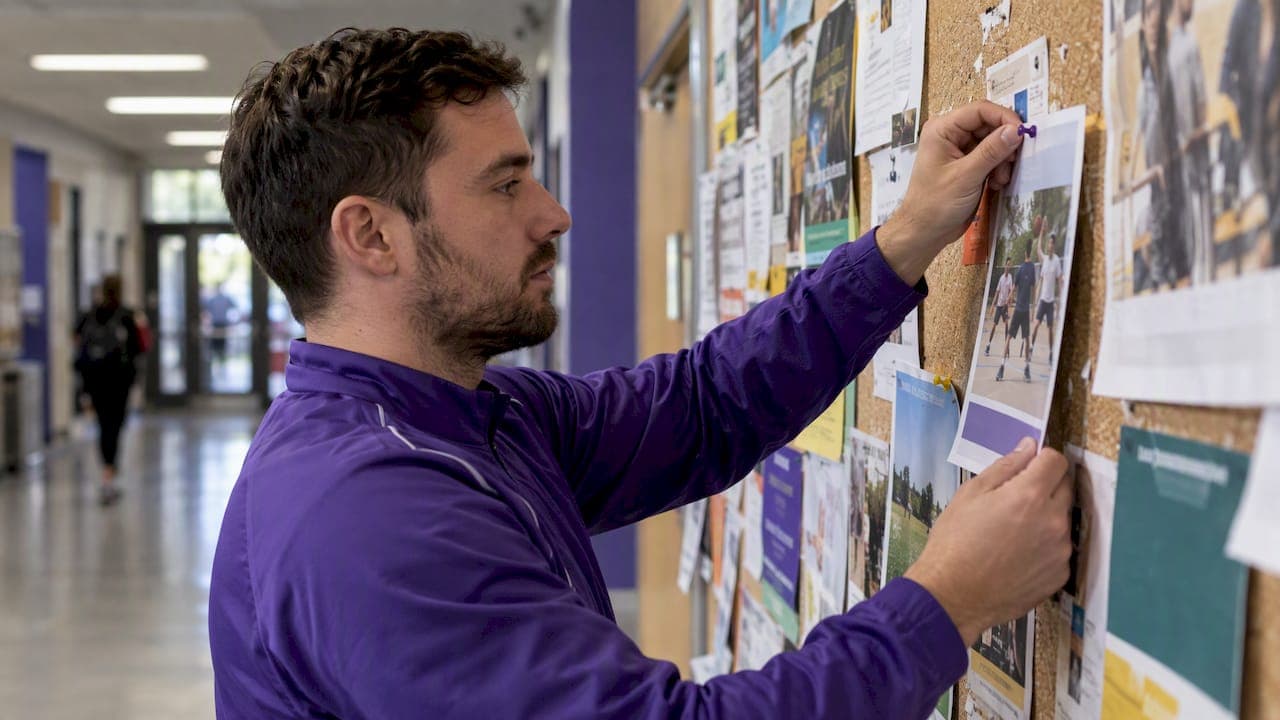
Digital promotion reaches people already looking at their phones, but flyers and posters catch people in the physical spaces where pickup games actually happen: community centers, libraries, coffee shops, and gyms. A flyer posted near a rec center's court schedule reaches exactly the audience walking past, often including people who aren't on your social channels at all.
Keep the flyer simple: day, time, location, skill level, and a QR code linking straight to your signup page. A QR code removes the friction of typing a URL and gets someone from "interested" to "signed up" in one scan.
Community centers, libraries, and local coffee shops often have bulletin boards specifically for this kind of posting, and many allow it for free or for a small fee. Rotate your flyer every few weeks so it doesn't blend into the background, and refresh the design seasonally to match whatever sport or format you're running.
Offline promotion works especially well for reaching players who are local but not active on the platforms you post to, older adults, newcomers to the area, or people who simply don't follow sports accounts. Pair a flyer campaign with your online posts rather than relying on either alone, since the two reach different slices of your potential roster.

Engaging With Influential Community Members or Local Sports Personalities
A respected player, coach, or local sports figure mentioning your game to their network carries more weight than a cold post from an unfamiliar account. Look for people already embedded in your local sports scene: a rec league captain, a gym instructor, or a well-known regular at a nearby facility.
The ask doesn't need to be formal. Invite them to a game as a guest, ask them to share your event page with their followers, or simply request that they mention it to people they coach or train. Most community figures are happy to support a casual, well-run game, especially if it adds value for the people they already influence.
If your area has a visible sports personality, a former college athlete, a local coach with a following, or someone known for organizing other community events, a direct message explaining your game and asking for a shoutout costs nothing and can meaningfully expand your reach. Keep the pitch specific: what the game is, why their audience would enjoy it, and what you're asking for.
This tactic compounds over time. Once one respected player vouches for your game, their endorsement lends credibility to your next round of promotion, making cold outreach to new venues or partners easier.
Timing Strategies for Optimal Promotion and Player Turnout
When you post matters almost as much as what you post. Evenings and weekends tend to get more attention on social platforms since people are off work and scrolling, so schedule your main promotional push for those windows rather than the middle of a workday.
For the event itself, a consistent weekly cadence works better than sporadic announcements. A three-part rhythm, announcing early in the week, sending a reminder about 48 hours out, and checking in the day of, keeps your game visible without overwhelming players with messages. This cadence balances staying top of mind against becoming the group chat everyone mutes.

Seasonal timing matters too. Launching a new pickup game right before a relevant season starts, like early spring for outdoor sports, taps into natural momentum as people look for ways to get active. Avoid launching around major holidays or during weeks when your target group is likely traveling.
Give people enough lead time to plan but not so much that they forget. A week to ten days of notice for a recurring game, with reminders closer to the date, tends to balance visibility against urgency without demanding too much advance planning from casual players.
Incentivizing Player Referrals to Grow Game Attendance
Your current players are your best recruiting channel because their friends already trust their judgment about which games are worth showing up to. A referral incentive turns that trust into action instead of leaving it as a missed opportunity.
Simple structures work best: a discount on the referring player's next game once their friend shows up, or a small perk like skipping the next registration fee. Keep the ask low-effort, something like "bring a friend, you both get a discount" is easier to act on than a multi-step referral program with tracking codes and expiration dates.
Referral incentives work especially well right after a launch promotion, when your newest players are still excited and more likely to invite someone. Pair the referral offer with a clear deadline, a few weeks at most, so it creates urgency rather than becoming a permanent discount nobody notices anymore.
Track which players bring the most referrals over time. A handful of highly connected regulars often drive a disproportionate share of new signups, and recognizing them, even with something as simple as a shoutout in the group chat, keeps them motivated to keep inviting people.
What Organizers Notice Once Signups Get Easier
The thing I hear most from organizers once they simplify their signup process is that retention improves almost immediately, not because the game changed, but because fewer people fall through the cracks between "interested" and "showed up." Every extra step, a form, a DM, a confusing link, costs you players you never find out you lost.
My one tip for this week: audit your current signup flow and cut it down to a single link that works the same way every time. If someone has to ask "how do I join," the flow is still too complicated.
— Daniel
How Roster Handles the Logistics While You Focus on Promotion
Everything above works better when the admin side runs itself. We built Roster around the idea that a single shared link should be enough to fill a roster, track who's coming, and manage drops without a single spreadsheet or group chat scramble.
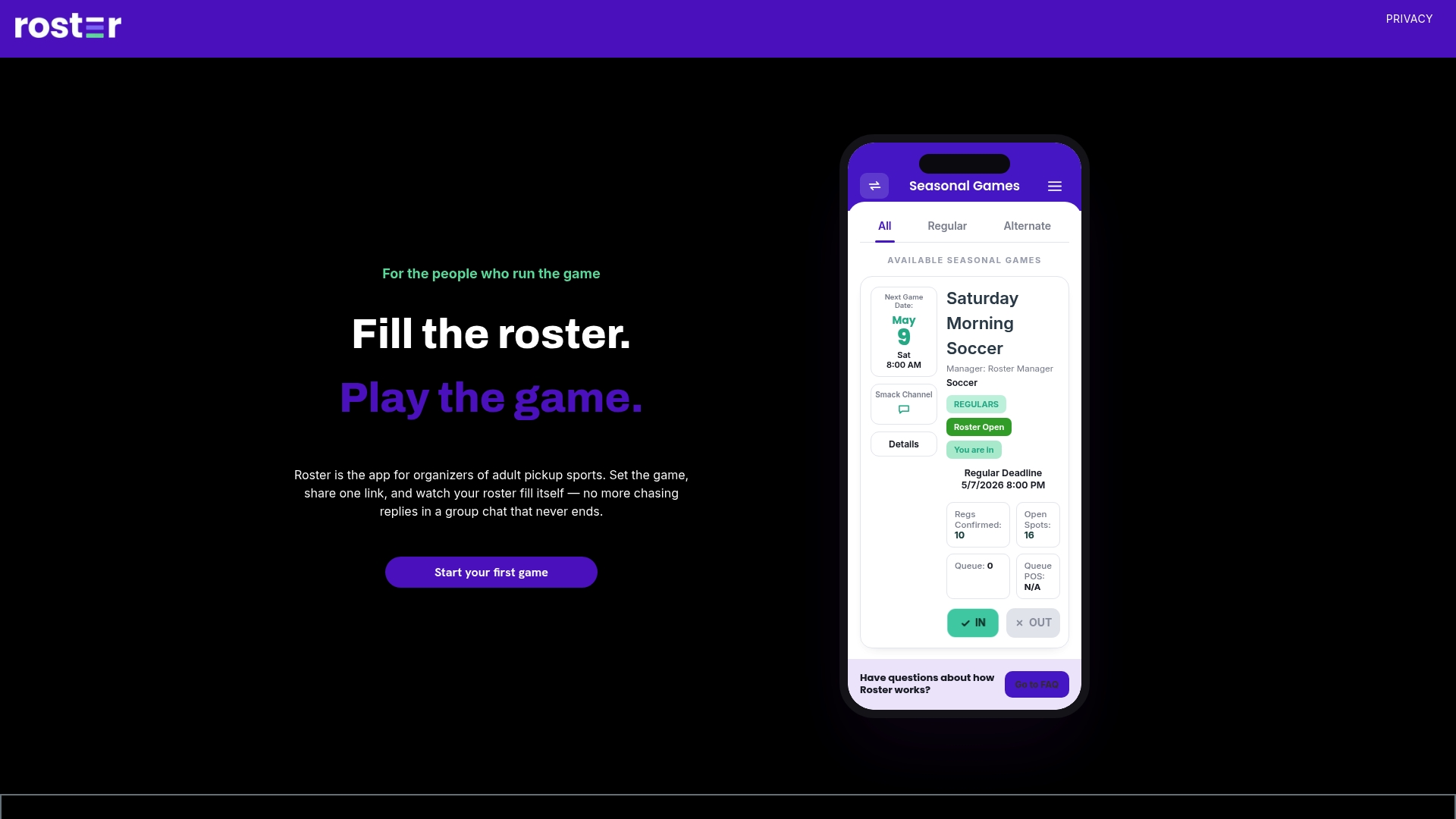
The following features directly support several of the tactics covered here:
- A single shared signup link for all promotions
- An automated waitlist to fill open spots when cancellations occur
- Real-time roster tracking to know who's confirmed
- Peer-to-peer payment tracking to simplify fee collection
If you're running a recurring game and spending more time on RSVPs than on the actual sport, see how the app works on our product page or get the app to set up your first event this week.
FAQ
What are the best ways to promote my game?
The most effective combination is visible social posts, especially Instagram and Facebook, paired with one signup link and a short launch incentive for first-timers. Back that up with clear game-day roles so attendees have a good enough experience to return and tell others.
What does "pickup games" mean?
Pickup games are informal, drop-in sports sessions organized without a fixed season, league structure, or long-term commitment from players. Anyone can typically join a single session, which makes clear communication about time, location, and skill level especially important.
What are some good games to pick up and play?
Common pickup sports include basketball, soccer, volleyball, and ultimate frisbee, all of which work well with flexible group sizes and minimal equipment. The right choice usually depends on local facility access and what your community already plays regularly.
Is there a promo code for GoodRec?
We don't have information on promo codes for other platforms. For details on Roster's own features and how organizers use the app, check our app links page.
How do I get people to actually show up after they sign up?
Send a reminder 48 hours before the game and a short check-in message the day of, which keeps the event top of mind without overwhelming your group chat. Clear roles and a fast check-in process also reduce the no-show rate because players know exactly what to expect.
Sources
- Promotion using social media correlates with higher participant interest (Permata Sakti Virtual Run 2020 analysis)
- Community-based sport participation and its role in building community and retention