
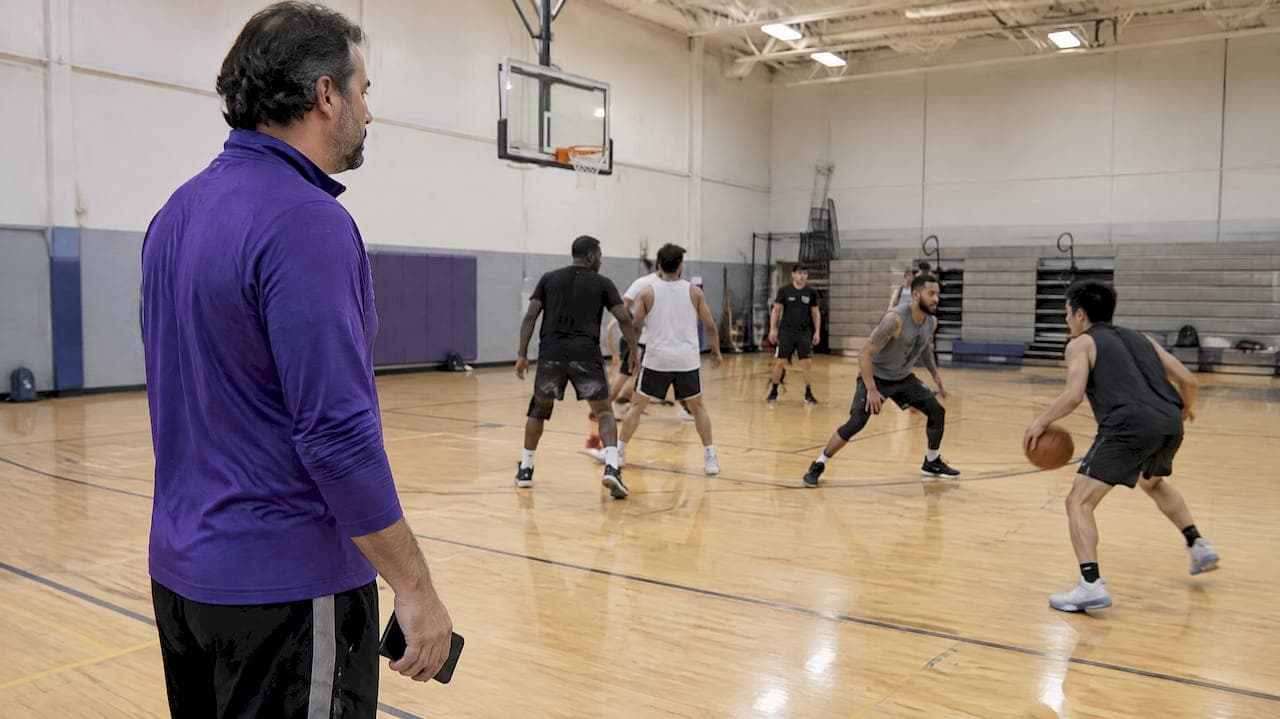
To organize pickup basketball reliably, validate demand, lock a venue, set a simple format, and use a roster management tool that automates RSVPs, waitlists, reminders, and payment tracking. Post a one-line interest signup, gauge response for a few days, then move to booking. The run itself should take less of your week than the planning does.
TL;DR:
- Booking a venue too early risks wasted money unless at least 60 to 80 signups are secured, accounting for typical 30-40% attrition.
- An effective signup process should include automated waitlists, reminders, and payment tracking to minimize admin time and ensure full rosters.
- Indoor courts vary widely in cost, with seasonal permits often being more economical than hourly rates at gyms or private facilities.
- Having rules, clear communication, and quick dispute resolution help maintain a smooth game environment and reduce conflicts.
- Automating logistics with a single link and roster management tools like Roster reduces administrative burden, freeing organizers to focus on community-building.
Table of Contents
- How to confirm demand and recruit players before you book a court
- Pick a scheduling workflow and the features you actually need
- Where to play and how to control venue costs
- Run game night smoothly: setup, officiating, payments, and no-show policies
- A real organizer workflow: how automated roster management saves admin time
- Safety and liability considerations including insurance options
- Equipment needs and maintenance: ball quality, hoops, uniforms
- Tips for managing group dynamics and conflict resolution during games
- Organizer perspective: focus on community, not spreadsheets
- Quickly get started with Roster
- Key organizer resources and guides
- Sources
- FAQ
How to confirm demand and recruit players before you book a court
Booking a gym before you know who is showing up is the fastest way to waste money. Start with a short interest survey: three questions is enough. Ask preferred format (full court or half court), general skill level, and the nights or times that work. That data tells you whether you have a casual Tuesday run or the foundation for a structured league.
Post the survey where your actual audience already hangs out.
- Local Facebook groups and neighborhood apps like Nextdoor reach people who already live near your target venue.
- Community boards at gyms, coffee shops, or recreation centers catch walk-up interest.
- A short social video with a direct signup link tends to move faster than a text post.
For a full 8-team 5v5 season, aim for 60 to 80 interest signups before you commit to venue contracts, since attrition between interest and paid registration typically runs 30% to 40%. A casual weekly run needs far fewer, often just enough regulars to guarantee two full teams. Waitlists on other local leagues in your area are a useful signal too: if a nearby run is turning people away, that is latent demand you can absorb.
Pro Tip: Send your invite message with the format, cost, and signup link in the first sentence, people decide to join or scroll past in about five seconds.
Pick a scheduling workflow and the features you actually need
Once demand is confirmed, the tool you use to manage signups determines how much of your week goes to admin instead of basketball. At minimum, you need:
- A single signup link you can post once instead of fielding individual texts.
- Waitlist automation that fills open spots the moment someone drops.
- Automated reminders sent before game day without you typing them.
- Payment tracking features to reduce manual chasing of payments.
- Waiver capture for anyone new to the group.
- Clear visibility into who is confirmed, who is out, and who is on the waitlist.
The setup changes depending on what you are running.
- A one-off pickup game just needs a signup link and a headcount.
- A recurring weekly run benefits from saved rosters and repeat reminders so regulars do not re-register every week.
- A seasonal league needs team assignments, standings, and a payment schedule tied to the whole season.
Alternates matter most in the recurring and seasonal formats. For 5v5, a roster of 8 to 10 regulars plus 2 to 3 per-game alternates covers normal no-shows. For 3v3, 5 to 6 regulars with one alternate usually holds. A free event page works fine for a single pickup run, but once you are tracking a season's worth of payments and substitutions, that is the point to move to a dedicated organizer app.
Where to play and how to control venue costs
Venue cost is usually the single biggest line item in running pickup basketball, so it pays to shop around. Indoor courts vary widely by type. School gyms run $25 to $60 per hour, recreation centers $40 to $80, and private complexes $75 to $150, while outdoor park courts often require a permit instead of an hourly rate. For anything recurring, a seasonal park permit at $200 to $800 for the full season is usually cheaper than paying hourly every week.
Negotiating seasonal or multi-run contracts with a single venue almost always beats paying week to week, and church gyms and community centers are often underused on weeknights and open to cold outreach from organizers. A nearby bar or restaurant sponsorship can also subsidize the cost, typically $300 to $1,500 per season, in exchange for your group becoming regular post-game customers.
Before you commit, walk the venue and check:
- Lighting that is bright enough for full-speed play, not just casual shooting.
- Floor condition, including dead spots or slick areas near entrances.
- Parking availability for the number of players you expect.
- Whether the venue carries its own liability coverage or expects you to provide proof of insurance.
Run game night smoothly: setup, officiating, payments, and no-show policies
A good run feels effortless to players because the organizer did the boring work ahead of time.
- Arrive 15 to 20 minutes early to check rim height, inflate balls, and confirm the scorer's table or scoreboard works.
- Hold a quick two-minute huddle to set teams, confirm the format, and state any house rules.
- Run the game, tracking substitutions as alternates arrive.
- Close out payments and send a quick thank-you or next-session reminder before everyone leaves.
If you use referees, decide pay and conduct expectations before the season starts rather than negotiating court-side. Recruiting from local college intramural programs or other leagues tends to produce officials who already know the pace of adult pickup games.
Payment flow works best when it is automatic: collect fees and waivers during signup, not at the door. Reminders sent a day before, combined with a small prepayment requirement, cut down on no-shows because players have something on the line. When someone does drop, pulling the next name off the waitlist keeps the game full without a scramble.
Pro Tip: Build your waitlist into the signup process from day one, even small pickup runs benefit from having a backup name ready when someone cancels last minute.
A real organizer workflow: how automated roster management saves admin time
Here is what a low-admin version of this looks like in practice. An organizer creates an event, sets the format and cost, and shares one link. Interested players tap it, fill the open roster spots, and the system automatically pulls the next person off the waitlist the moment someone cancels. Reminders go out on their own, payments get tracked per player instead of chased down individually, and the organizer spends game night playing instead of managing a group chat.
Each piece removes a specific task: no more manually re-texting a full roster, no more spreadsheet math on who paid, no more guessing who is actually showing up.
A single shared link plus automated reminders replaces the group chat entirely, and that is often the difference between a run that survives a season and one that fizzles after three weeks.
For message templates that actually fill rosters, see six invite message elements that work, and for reducing drop-offs, this breakdown of no-show tactics covers prepayments and reminder timing in more detail.
Safety and liability considerations including insurance options
Pickup basketball carries real injury risk, from rolled ankles to collisions under the rim, and organizers should treat liability as part of the setup, not an afterthought. Many venues, especially recreation centers and private complexes, carry their own facility insurance, but that coverage typically protects the building, not you as the organizer of a private group.
A basic liability waiver, signed during signup rather than handed out on paper, is the simplest protection: it documents that players understood the risks of a physical contact sport before they stepped on the court. For organizers running a recurring league or charging fees, a short-term event insurance policy or a rider on a personal policy is worth pricing out, since the cost is usually small relative to the exposure of one serious injury claim.
Church gyms, school facilities, and permitted park courts sometimes require proof of insurance before they will let an outside group book the space, so confirm this during the venue search rather than after you have already collected signups. Keeping a basic first aid kit on hand and knowing where the nearest urgent care is are simple, low-cost habits that matter more than people expect until the night they are needed.

Equipment needs and maintenance: ball quality, hoops, uniforms
Equipment is a small budget line but an easy place to lose player trust if you cut corners. A game ball that holds air and grips well matters more than players usually mention until the ball goes flat mid-run. Composite leather balls hold up better than rubber for indoor courts and are worth the extra cost for a recurring group.
Check rim height and net condition before the first session of any run, a loose rim or a torn net is a quick fix that prevents a worse first impression. Keep a spare ball and a pump in your bag, since a flat ball with no backup ends a game early.

Uniforms or even simple pinnies in two colors solve the single most common pickup basketball problem: not being able to tell teams apart at a glance. They do not need to be expensive, a cheap set of mesh pinnies lasts for seasons if you collect them after each run instead of letting players keep them. Store and wash equipment regularly, a bag of sweat-soaked pinnies left in a car trunk degrades fast and becomes a reason people stop showing up.
Tips for managing group dynamics and conflict resolution during games
Most pickup basketball conflict comes from ambiguity, not bad intent. Set the rules before the game starts, not during a disputed call: how fouls are called, whether games are win by two, and what happens when teams are uneven. Stating this in a thirty-second huddle before tip-off prevents most arguments before they start.
When a dispute happens mid-game, the organizer's job is to make a quick call and move on rather than let players debate it out. A simple standing rule, like the player who was closest to the play makes the call, removes the organizer from having to referee every possession personally.
Repeat offenders, players who consistently escalate contact or argue calls, are worth a direct, private conversation rather than a public confrontation. Most pickup groups police themselves once the norms are clear: regulars will naturally exclude someone who makes the run less enjoyable, and the organizer's role is mostly to set the tone early and enforce it consistently.
Organizer perspective: focus on community, not spreadsheets
The real value of automating signups and payments is not saved time, it is what you do with that time. Organizers who spend their Tuesdays chasing Venmo requests rarely have the energy left to build the parts of a pickup group that make it last: a post-game beer run, a referral discount for bringing a friend, a simple thank-you message after a good season.
Admin burnout is why most casual runs die within a year. The groups that last build community on top of reliable logistics.
— Daniel
Quickly get started with Roster
Every feature covered in this guide, a single signup link, automatic waitlist fills, and payment tracking that does not involve chasing anyone, is what Roster is built to handle for pickup basketball organizers.
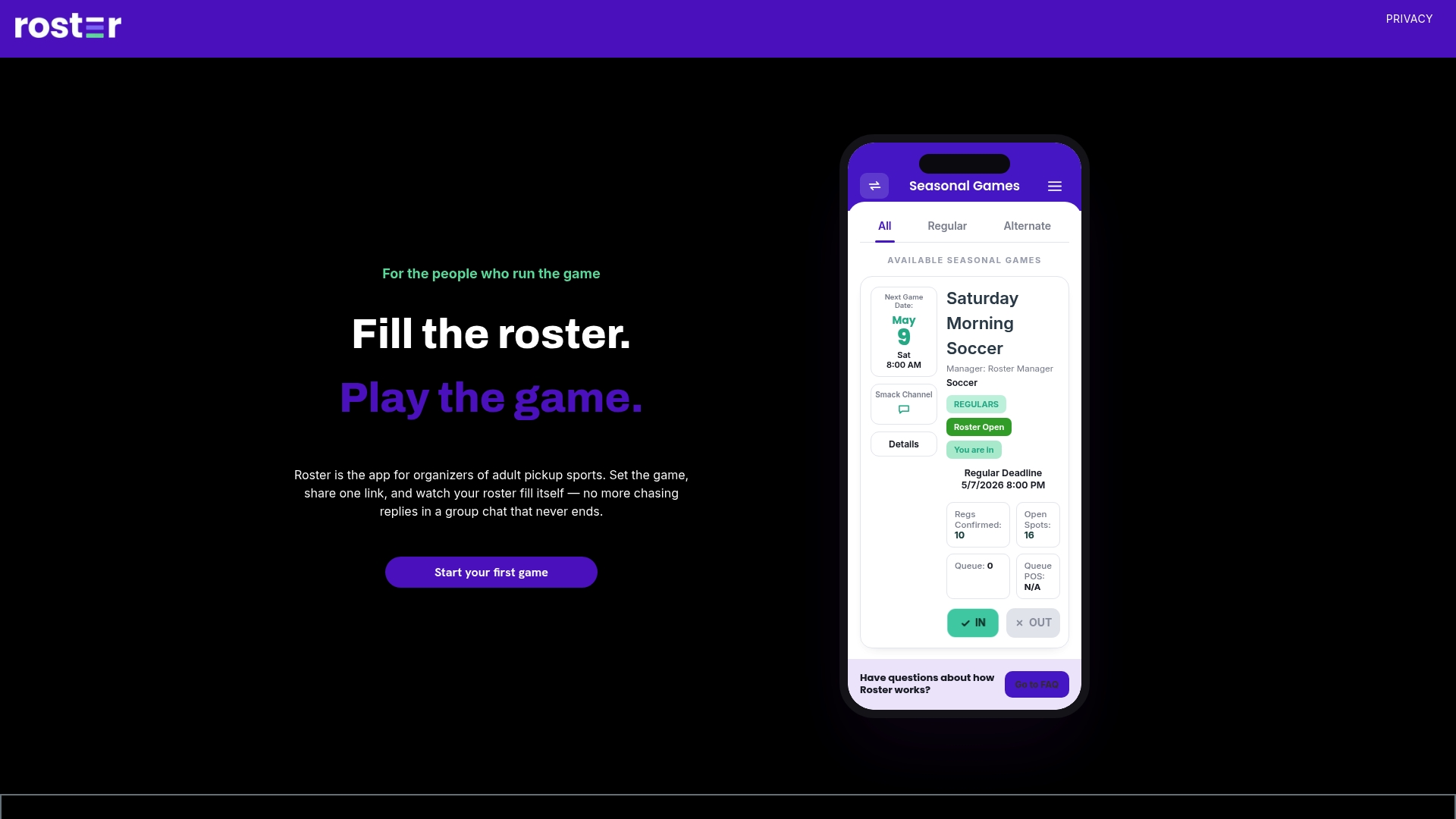
- Share one link instead of managing a group chat full of RSVPs.
- Let the app pull alternates off the waitlist automatically when someone drops.
- Track per-player payments without manually requesting or logging Venmo transfers.
If you are ready to spend less time on logistics and more time actually playing, visit Roster to set up your next game.
Key organizer resources and guides
For deeper league setup detail, see guides on starting a basketball league and starting an adult rec league. For payment setup specifics, FlexLeague+'s payments guide is a useful reference.
FAQ
What is the best pickup basketball app for organizers?
The right app depends on what you need, but the most useful ones let you share a single signup link, automate waitlists, and collect payments without manual tracking. Roster is built specifically for this kind of adult pickup sports coordination.
Why is the number 7 not allowed in some basketball leagues?
Some leagues or jersey suppliers restrict certain numbers for logistical reasons, like scoreboard or scorekeeping systems that cannot display certain digits clearly, but this varies by league and is not a universal basketball rule. Check with your specific venue or league before assuming any number is banned.
What are some unwritten rules of pickup basketball?
Common unspoken norms include calling your own fouls honestly, not hogging the ball on a team of strangers, and letting the next team rotate in after a loss rather than holding the court. Groups also tend to expect players to show up on time and communicate early if they cannot make it.
How much does it typically cost to run a basketball season?
Costs vary by venue, but typical adult basketball league fees run $75 to $150 per player per season, largely driven by court rental rates. Organizers using Roster pay a per player, per season fee for roster management rather than the venue cost itself, which is billed separately.