

The fastest way to stop managing pickup games through endless group texts is to switch to a roster app, such as Roster, that automates signups, waitlists, and payments. Organizers who make the switch spend less time chasing RSVPs and confirming alternates, and their rosters stay accurate instead of buried in scrollback. The steps below walk through why group chats break down and exactly how to move your players to a better system.
TL;DR:
- Switching to a dedicated roster app reduces manual tracking and online message volume compared to managing RSVPs in group chats.
- An app like Roster automates signups, waitlists, and payments, significantly cutting organizer hours from hours to minutes weekly.
- Transitioning involves a clear cutover plan, including a firm date, shareable link, and keeping the group chat for casual chatter temporarily.
- A live roster view and automatic waitlisting improve accuracy and fill canceled spots without additional messaging.
- Most players only need a simple explanation: tap, enter your name, and join, making onboarding quick and straightforward.
Table of Contents
- Why group chats fail for pickup organizers
- What a roster app does differently
- Step-by-step migration checklist to move players off group chats
- Ready-to-send invite and follow-up message templates
- Tips to get buy-in from players and keep the transition smooth
- Organizer perspective: a before and after account
- Try Roster for your next pickup game
- FAQ
- Sources
Why group chats fail for pickup organizers
Group chats were built for conversation, not coordination, and the gap shows up fast once a roster depends on them. Research on large group chats found an inverted U relationship between message volume and participation: activity rises as a chat gets more useful, then collapses into noise once volume passes a certain point, turning a working conversation into cacophony. After reaching a certain threshold, people send shorter, more repetitive messages and stop reading closely, which is exactly when an RSVP gets missed.
For an organizer, that plays out in familiar ways:
- RSVPs get lost between social chatter, memes, and side conversations.
- Alternates don't see the "need one more" message until the game has started.
- The same question gets asked and answered three times by different players.
- Scheduling changes get buried, so half the roster shows up for the wrong time.
General collaboration tools like Slack help some teams by archiving messages and centralizing documents, as shown in a case study of Slack adoption in a research setting. But archiving isn't the same as automating a roster. Group chats, even organized ones, still require someone to manually track who is in, who is out, and who is owed a spot.
What a roster app does differently

A roster app replaces manual tracking with a system that updates itself. Instead of posting availability questions and tallying replies by hand, you share one link and let the app manage signups directly, filling open spots automatically and moving drop-outs onto a waitlist. Roster is built specifically for this: a single shared link, a live roster, automated waitlist handling, and payment tracking rather than a feed you have to re-read before every game.
Each feature solves a specific group chat problem:
- A single signup link replaces the "who's in" thread entirely.
- A live roster view shows exactly who is confirmed, no scrolling required.
- Automatic waitlisting fills a cancelled spot without you sending a follow-up message.
- Payment tracking removes the awkward "did you Venmo me" messages after each game.
Pro Tip: Set your regular roster and recurring game schedule first, before you invite anyone. Players see an organized signup from day one, which makes the switch feel like an upgrade instead of extra homework.
Step-by-step migration checklist to move players off group chats
Moving a team off a group chat works best as a short, structured rollout rather than an abrupt switch. The goal is to overlap old and new systems just long enough that nobody misses a game.
- Choose your platform using clear criteria: privacy controls, mobile usability, waitlist handling, and built-in payment tracking.
- Draft your announcement and reminder templates before you launch, so you're not writing them under pressure.
- Announce the change with a firm timeline: pick a cutover date two to three weeks out.
- Share the single signup link in the group chat and pin it if your chat app supports pinning.
- Set the old group chat to read-only or archive it once the new system is confirmed working.
- Run your first two or three events with clear roles: one person monitors signups, one confirms alternates.
- Test the payment flow on a low-stakes game before relying on it for a full season.
- Track a few simple metrics weekly to confirm the switch is working.
| Metric | Group chat baseline | After switching to an app |
|---|---|---|
| Roster fill rate | Manual tally, often incomplete | Automatic, visible in real time |
| Organizer hours per week | Several hours chasing replies | Minutes checking a live roster |
| Message volume | High, mixed with social chat | Low, limited to game-specific updates |
Keep the old chat around for a week or two after launch as a safety net, then archive it once signups through the app are steady.
Ready-to-send invite and follow-up message templates
Clear, short messages make the switch painless. Use these as starting points and adjust the tone to match your group.
- Announcement: "Starting [date], we're moving signups to Roster. Tap this link to join the next game: [link]. The group chat will go read-only after that."
- Reminder for alternates: "We've got one open spot for Thursday. First to tap the link gets it, and you'll move up automatically if someone drops."
- How-to note for less tech-savvy players: "No account needed, just tap the link, enter your name, and you're on the roster. You'll get a text if your status changes."
- Payment or cancellation note: "Spots are tracked automatically, and Venmo requests go out after the game. Cancel through the link if your plans change so the next player can move up."
These short, repeatable messages do more than announce a tool. They set the expectation that signups and payments now happen in one place instead of scattered across a chat thread, which matters more than the tool itself for getting people to actually switch.
Tips to get buy-in from players and keep the transition smooth
Framing matters more than features here. Tell players the switch means less admin and more actual playing time, not another app to manage. Offer a quick, two-minute walkthrough for anyone who asks, and keep a short trial period where you still answer questions in the old chat if someone gets stuck.
- Reserve a starter spot for the first few players who sign up through the app.
- Keep the group chat open for banter and logistics chatter, not for RSVPs.
- Set one clear rule: signups and cancellations happen in the app, everything else stays in chat.
- Check in after the first two games and fix friction points immediately.
Pro Tip: Call out the first player who signs up through the new link in the group chat. Public, low-key recognition nudges the rest of the roster to follow faster than a second reminder message does.
Organizer perspective: a before and after account
Before switching, I spent close to three hours a week chasing RSVPs across two group chats for a weekly pickup soccer game, and we still showed up short-handed more often than not. After moving to a roster app, that dropped to checking a live roster for a few minutes before each game, with waitlisted players filling in automatically. The lesson that stuck with me: the chat didn't fail because people were careless, it failed because tracking commitments was never what group messaging was built to do.
— Daniel
Try Roster for your next pickup game
Roster gives organizers a single shared link that handles signups, fills open spots automatically, manages the waitlist, and tracks payments between players and managers, so you're not doing any of that by hand in a chat thread.
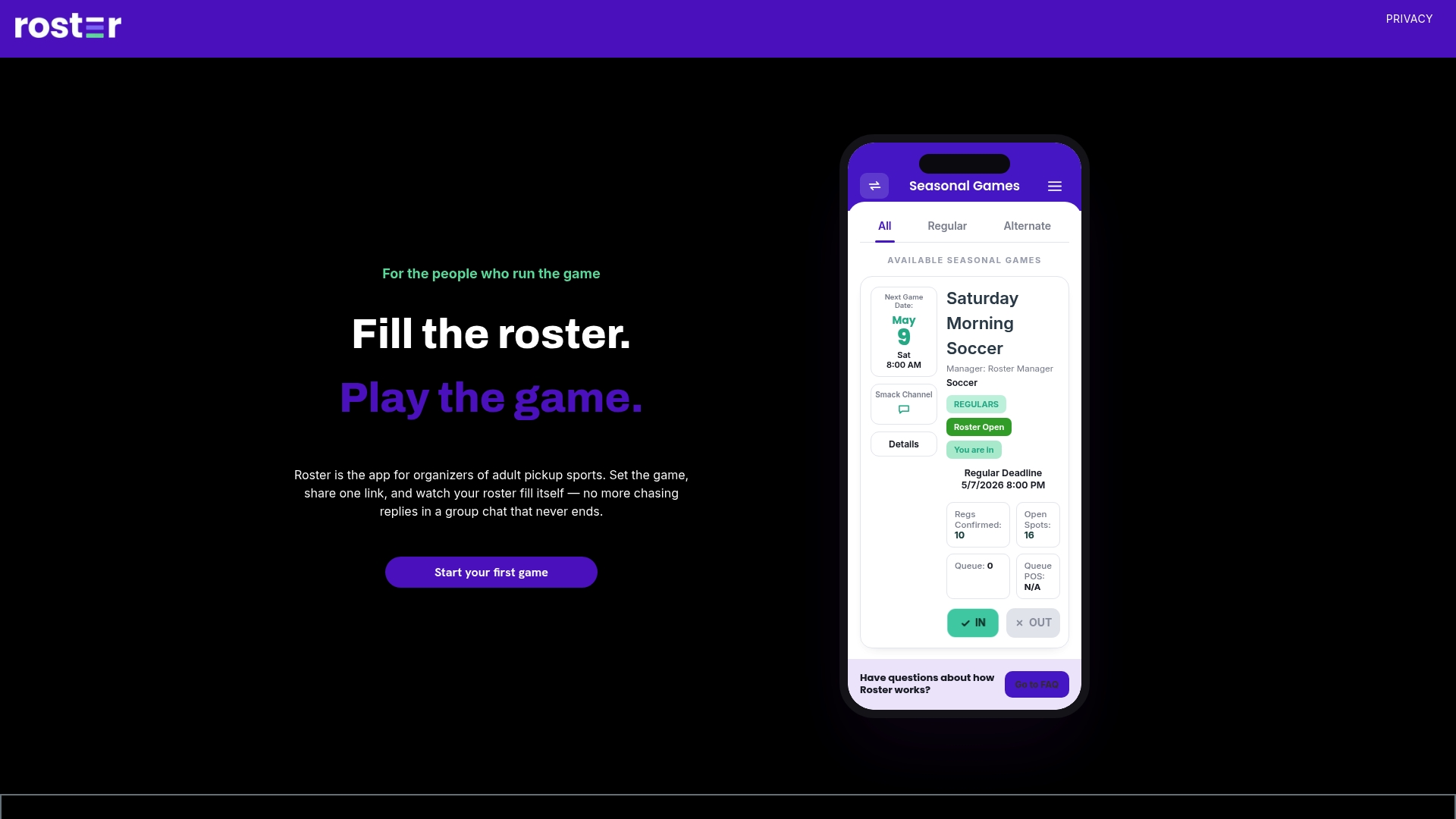
- Create your game and set the schedule.
- Share your signup link with your current roster.
- Let the app handle waitlist fills and payment tracking from there.
Start with your next scheduled game and see how much shorter your admin list gets.
FAQ
How do I get players to stop using the group chat?
Set a firm cutover date, share the new signup link directly in the chat, and switch the chat to read-only once signups are confirmed in the app. Keeping both running for a week or two as a buffer reduces resistance.
Will a roster app actually reduce message volume?
Yes. Moving RSVPs and waitlist management out of a chat removes the repeated questions and confirmations that drive message volume up, which is the same pattern described in research on group chat overload.
What happens to players who cancel last minute?
In Roster, a cancellation automatically opens the spot to the next person on the waitlist, so you don't have to resend a message asking who wants in.
Is it safe to track payments through a signup app?
Roster tracks payments between players and managers using a payment integration, which keeps the financial exchange between the two parties rather than routing it through the software provider. As with any third-party app, it's worth reviewing how your roster data and payment history are stored before relying on it for a full season.
Do I need to train players to use the new system?
Most players only need a one-line explanation: tap the link, enter your name, and you're on the roster. A short how-to message during rollout, like the templates above, covers the rest for less tech-savvy players.
Sources
- Information overload in group communication: from conversation to cacophony in the Twitch chat
- Integration of Slack, a cloud-based team collaboration application, into research coordination | BMJ Health & Care Informatics