
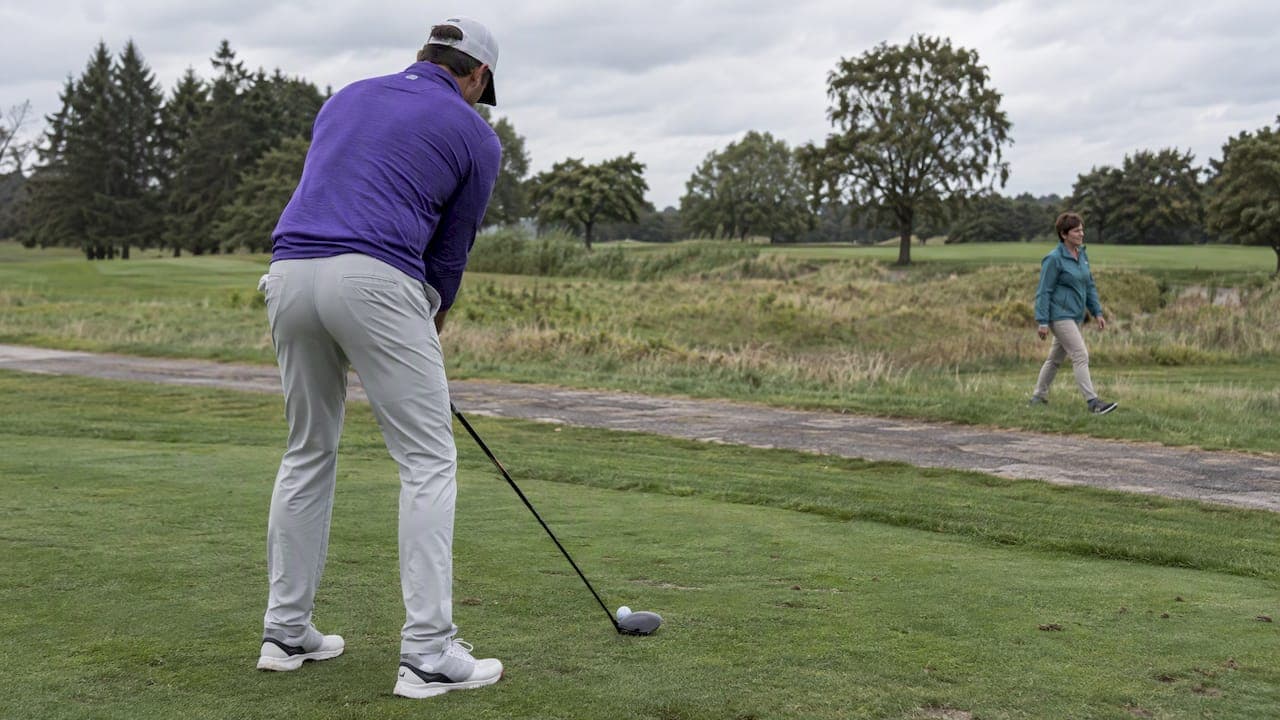
A workable pickup spectator policy says: watch from the rough or cart path, keep a published distance from players, never offer advice, follow local cart rules, and accept that the organizer can ask anyone to leave. USGA Rule 10.2 governs what counts as advice in golf, and we recommend organizers publish one specific yardage, such as 15 to 30 yards, so nobody has to guess.
TL;DR:
- Spectators should stay 15 to 30 yards behind players, walk on rough or cart paths, and avoid fairways, greens, or player-only zones to prevent delays.
- Comments like "nice shot" are allowed, but giving advice on clubs or swings is prohibited, with clear written rules helping avoid disputes.
- Use a single, published distance for spectator placement and enforce it consistently to reduce confusion and keep play moving efficiently.
- Confirm cart and mobility device policies in advance, reserving carts for mobility aids and ensuring spectators stay on paths unless permitted otherwise.
- Keep phones silent during play, follow venue rules for alcohol and smoking, and clearly communicate expectations before the round to prevent conduct issues.
Table of Contents
- What spectators may and may not do
- How far back should spectators stand during play?
- Applying golf's advice rule to casual rounds
- Carts, mobility devices, and fair access for everyone
- Phones, cameras, alcohol, and basic conduct on course
- The organizer's pre-game checklist for spectator rules
- Why a short spectator policy changes how pickup games feel
- Publishing and enforcing your spectator policy with Roster
- FAQ
- Sources
What spectators may and may not do
Most disputes at pickup games come down to ambiguity. A short, specific list fixes that before anyone steps on the course. Spectators generally stay welcome when they follow a few predictable habits, and the same list tells them exactly where the line sits.
- Walk on cart paths or in the rough, never on fairways or greens.
- Applaud or react quietly without shouting instructions or distractions.
- Help search for a lost ball while staying a reasonable distance from the players.
- Carry personal items like a water bottle or chair, but never a player's clubs.
- Stay out of scoring areas, tee boxes during a shot, and designated player-only zones.
The line between harmless comment and prohibited advice matters more than most pickup groups realize; understanding the importance of spectator boundaries helps keep play fair and enjoyable for everyone, as explained in Champions League Live Lineup Importance for Fans. Saying "nice shot" or pointing out where a ball landed is fine. Suggesting a club, a line, or a swing fix crosses into advice territory, the same category USGA Rule 10.2 covers in sanctioned play. Pickup games rarely enforce formal penalties, but the behavior still slows play and creates friction between friends who disagree about whether a comment counted as coaching.
Loud conversations near a backswing, phone calls during someone's shot, and walking into a player's sightline all fall into the same prohibited bucket. None of these require a rulebook to understand, but writing them down once removes the need to relitigate them every weekend.
How far back should spectators stand during play?
Distance guidance exists for a reason: spectators standing too close slow down decision-making and occasionally end up in a player's shot line. Tournament organizers solved this by publishing a single number instead of leaving it to interpretation. The 2026 MGA Spectator Policy tells spectators to walk ahead of or parallel to the group they are watching, staying in the rough or near the cart path rather than trailing behind.
For pickup events, picking one number and sticking with it beats any attempt at nuance. Some groups use a small distance, others use a larger one within a typical range; the exact figure matters less than consistency. The exact figure matters less than consistency: once everyone knows the number, nobody has to ask.
Lagging behind a group or shadowing a single player creates a ripple effect. The group behind gets stuck waiting, and the whole event runs long. Walking ahead or parallel avoids that entirely, since spectators reach the next viewing point before players arrive rather than scrambling to catch up mid-shot.
A few habits keep spectators out of the way without asking them to give up the experience:
- Move to the next viewing spot while players are walking, not after they've arrived.
- Step well off the fairway line whenever a group is approaching a shot.
- Avoid clustering near the green until the group ahead has finished putting.
Pro Tip: Post the yardage number on the scorecard or group chat before the round starts so nobody has to ask mid-round.
Applying golf's advice rule to casual rounds
Formal advice rules exist to keep decisions in the player's hands, and that principle translates directly to pickup golf even without a rules official on site. USGA Rule 10.2 defines advice broadly: suggesting a club, a line, or how to play a shot all count, and the rule lists penalties for players who ask for or accept it during a round. Pointing out a hazard or confirming a rule isn't advice; recommending a 7-iron over an 8-iron is.

The rule gets more complicated than most casual players expect. If a spectator keeps offering advice and a player doesn't make a clear effort to stop it, the interactions can be treated as if the player accepted the advice, according to USGA guidance. That nuance rarely matters in a friendly Saturday round, but it's exactly why organizers benefit from a blanket "no coaching" rule rather than trying to referee intent after the fact.
A short notice posted before the round removes the ambiguity:
That single sentence does most of the work. It tells spectators what's off limits, and it gives players a clear answer when a well-meaning friend starts offering tips: "ask the organizer."
Carts, mobility devices, and fair access for everyone
Spectator carts create more friction than almost any other rule, mostly because policies vary by course and nobody tells spectators in advance. The FSGA spectator cart guidance keeps carts on the path, limits passengers, and reserves use for things like evacuation rather than general sightseeing, and spectator privileges can be revoked for violations. Course rules differ, so organizers should confirm local policy rather than assume one set of rules applies everywhere.
Mobility devices deserve a different approach than general spectator carts. The MGA's policy generally prohibits spectator carts except for documented mobility devices, treating those requests case by case with safety review built in. A fair pickup policy copies that distinction: personal mobility aids get accommodated, rental-style carts for general spectating don't, unless the venue explicitly allows it.
- Confirm cart-path rules with the course before the event, since they vary by venue.
- Ask mobility-accommodation requests to come in ahead of time, not at the first tee.
- Designate a few viewing spots that are easy to reach by cart path without crossing play areas.
A short line in the event notice covers this cleanly: "If you need a mobility accommodation to spectate, let the organizer know before the round so we can confirm with the course and find a safe viewing route."
Phones, cameras, alcohol, and basic conduct on course
Most conduct issues at pickup events are small and preventable. Phones should stay on silent, with no flash and no calls during a player's shot; a quiet photo between shots is fine, a video call narrating someone's swing is not. Cameras and casual photography are generally welcome as long as they don't create noise or movement during a shot.
Alcohol and smoking follow whatever the venue allows, and spectators are expected to keep both low-key and clean up after themselves. Loud, disruptive, or disrespectful behavior toward players or other spectators is grounds for a warning, and repeat issues are grounds for asking someone to leave for the rest of the round.
- Keep phones silent and away from players' sightlines during a shot.
- Follow the course's own alcohol and smoking rules, and pack out any trash.
- Treat a first warning as a real warning: a second incident means removal.
The organizer's pre-game checklist for spectator rules
A spectator policy only works if it reaches people before they show up expecting to wander wherever they like. Building it into the pre-game routine, rather than announcing it on the first tee, prevents almost every dispute before it starts.
- Pick one yardage number for spectator distance and use it every time.
- Name a single point person for rules questions and enforcement decisions.
- Collect mobility-accommodation requests in advance through the event invite.
- Mark two or three viewing spots that stay clear of fairways and greens.
- Send a short written notice covering advice, carts, phones, and conduct before the round.
- Give a one-minute verbal reminder at the first tee for anyone who missed the notice.
A workable notice-to-players template covers the basics in under 100 words: spectators stay 20 yards back (or whatever number fits the course), no advice on club or shot selection, carts stay on paths except for registered mobility devices, phones on silent, and the organizer handles all rules questions and enforcement. Borrowing structure from a team code of conduct template makes this faster to draft the first time.
On-site enforcement works best as a simple ladder: a quiet word first, a clear warning second, and removal for a third incident or anything serious. Collecting a quick note afterward, even a one-line message in the group chat, helps the next event run smoother.
The app's messaging and RSVP tools can help organizers post the spectator notice in the same link players use to confirm attendance, collect accessibility requests through the signup form, and send a reminder message the morning of the game without starting a new thread.
Pro Tip: Attach the spectator notice to the same RSVP link players already use, so nobody has an excuse for not seeing it.
Why a short spectator policy changes how pickup games feel
Most disputes I've seen at pickup games trace back to a rule nobody wrote down. One group I watched went from a weekly argument about "where exactly" spectators should stand to zero complaints after posting a single line: stay 20 yards back, no advice, ask the organizer with questions. The rule itself wasn't complicated. Writing it down once removed the need to re-explain it every week.
Clear rules don't make pickup games more formal, they make them faster and friendlier. Players stop wondering whether a comment from the sideline counts as coaching, and spectators stop guessing where they're allowed to stand. Publish the policy with the RSVP, not as a verbal aside at the first tee, and most of the friction disappears before anyone arrives.
— Daniel
Publishing and enforcing your spectator policy with Roster
Writing a good spectator policy is one thing, getting it in front of every player before they show up is another. We built Roster so organizers can attach a notice, like spectator rules or mobility-accommodation instructions, directly to the same link players use to confirm their spot, instead of hoping everyone reads a separate group chat message.
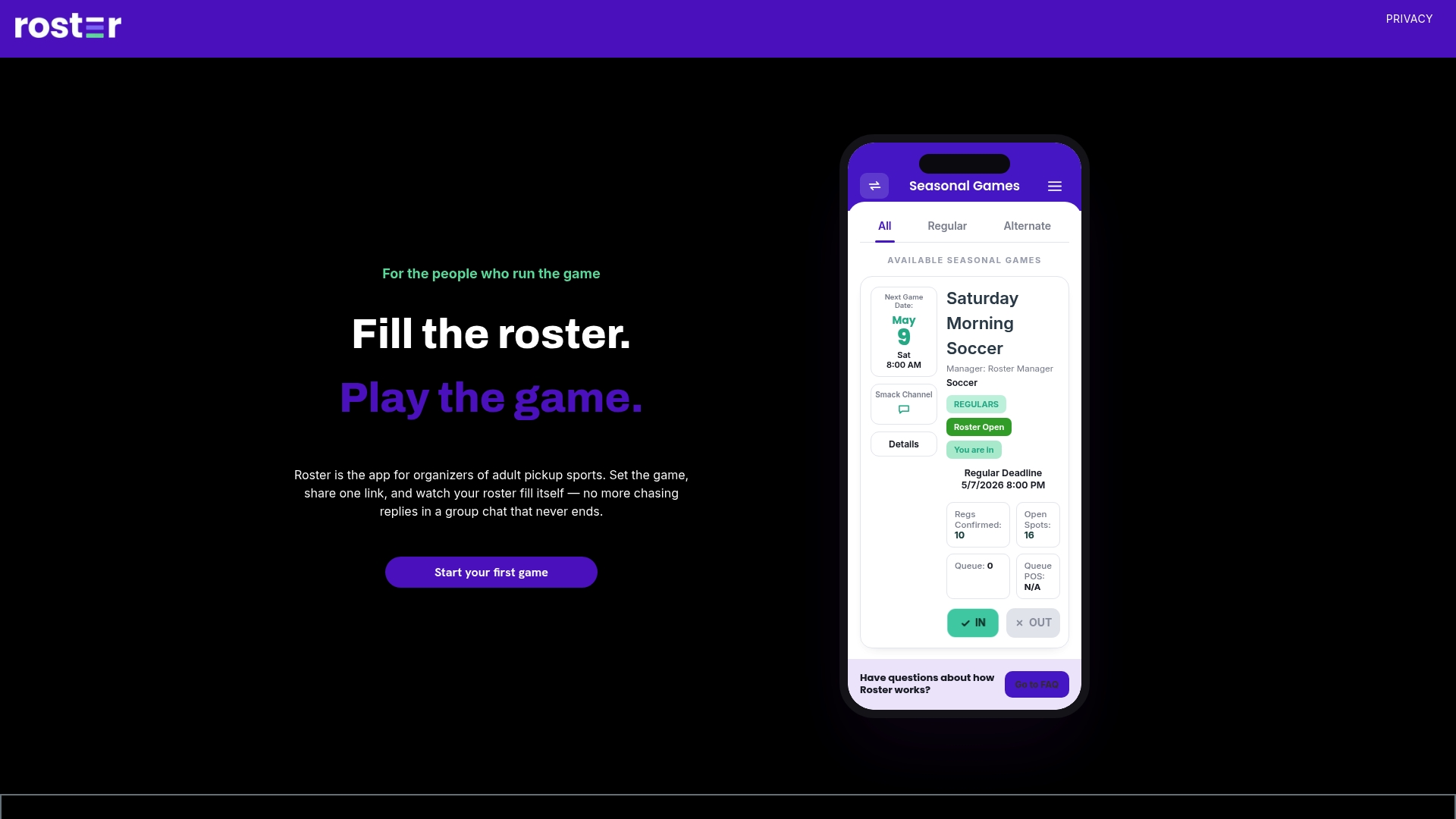
A few features make this specific job easier:
- One shared link for RSVPs means the spectator notice reaches everyone who signs up, automatically.
- The waitlist and real-time roster updates mean last-minute changes don't bury the policy in old messages.
- Built-in messaging lets an organizer send a same-day reminder without starting a new chat thread.
If someone needs a mobility accommodation, they can flag it when they sign up rather than mentioning it at the first tee under time pressure. Set up your next game on Roster and send the policy out with the invite instead of repeating it every week.
FAQ
What does USGA Rule 10.2 say about spectator advice?
USGA Rule 10.2 defines advice as any suggestion about club selection, strategy, or how to play a shot, and it can carry penalties when a player asks for or accepts it during a round. Pickup games rarely enforce formal penalties, but the same definition works well as a plain "no coaching" rule for casual rounds.
How far should spectators stand from golfers during play?
Tournament policies vary, with some using 15 yards and others 25 to 30, so the exact number matters less than picking one and publishing it clearly, as the MGA spectator policy does for its events. Organizers running pickup games should choose a single figure and share it in the event notice so nobody has to guess.
Can spectators use golf carts during a pickup round?
Spectator cart rules depend on the course, but common policy keeps carts on the path and limits their use, as described in the FSGA spectator guidance. Personal mobility devices are typically handled differently from general spectator carts and should be confirmed with the course ahead of time.
What happens if a spectator breaks the rules at an event?
Policies like the Disc Golf Pro Tour spectator guide describe removal for anyone who doesn't follow staff directions or stays out of designated areas, and the same escalation works for pickup events. A quiet first warning, a clear second warning, and removal on a third incident keeps enforcement consistent without needing a formal referee.
Does Roster include a spectator policy feature?
Roster doesn't publish a spectator policy for you, but organizers can attach a written notice, including spectator rules, directly to the RSVP link players use to sign up for a game on Roster. That keeps the policy in front of every attendee without a separate message.
Sources
- Rule 10 — Preparing for and Making a Stroke; Advice and Help; Caddies (USGA)
- 2026 MGA Spectator Policy
- Spectator Policies - FSGA
- Spectator guide — Disc Golf Pro Tour