
Burnout among adult pickup-game organizers and volunteer team managers is common, but it is not permanent and not inevitable. The fastest way out is a small cluster of changes: set clear limits on your role, delegate specific tasks to specific people, and automate the repetitive parts of signups and waitlists. The sections below walk through the signs, the root causes, and a step-by-step plan you can start this week.
TL;DR:
- Setting a fixed signup window and publishing clear policies can reduce last-minute tasks and enforce rules efficiently.
- Rotating responsibilities and scheduling backup organizers help distribute workload and prevent task overload.
- Using a single shared signup link, automated waitlists, and reminders significantly cut admin time for recurring or large groups.
- Implementing simple workflows like shared spreadsheets and payment links prevents hours spent chasing RSVPs and dues.
- A dedicated organizer app becomes valuable once managing more than ten players weekly, automating roster, waitlist, and payment tracking.
Table of Contents
- How burnout looks for pickup-game and volunteer organizers
- Root causes that drive burnout in organizers
- A prioritized plan to prevent and recover from burnout
- Tool and workflow fixes that cut organizer hours
- An organizer's perspective on what actually works
- When a dedicated organizer app helps
- FAQ
- Sources
How burnout looks for pickup-game and volunteer organizers
Burnout rarely arrives as a single bad night. It builds through small signals that are easy to dismiss when you are the one running the group chat, chasing RSVPs, and filling a roster before Sunday's game.
The World Health Organization defines burnout as an occupational phenomenon with three parts: energy depletion or exhaustion, increased mental distance or cynicism toward the activity, and a drop in your own sense of effectiveness. For a pickup-game organizer, that translates into specific, checkable symptoms.
- Admin exhaustion: dreading the hour before kickoff spent texting no-shows and rearranging the lineup.
- Cynicism creeping in: feeling resentful toward players who flake, or irritated by requests that used to feel normal.
- Reduced efficacy: struggling to fill a roster that used to fill itself, and doubting whether it's worth the effort.
- Behavioral red flags: letting messages sit unanswered, skipping a game you'd normally run, or snapping at people over minor scheduling asks.
The CDC's guidance on supporting worker mental health lists feeling persistently tired or overwhelmed, trouble sleeping, and trouble concentrating as common burnout experiences, and points to organizational fixes rather than willpower as the real remedy.
One useful check: if you've canceled, delayed, or quietly dreaded your organizing duties more than once in the past two weeks, treat that as an early warning rather than a one-off bad week.
Root causes that drive burnout in organizers
Burnout in volunteer sports organizing almost never comes from one bad event. It builds from three overlapping pressures that compound over a season.
Role ambiguity is the first. When nobody has written down what the organizer is actually responsible for, you end up owning everything by default: scheduling, payments, conflict resolution, weather calls, and equipment. Volunteer research on role ambiguity and burnout found that unclear roles and a lack of voice in decisions significantly raise burnout and the likelihood a volunteer quits, while clear role definitions and task support reduce that risk.

Task overload and mission creep come next. A role that started as "send the weekly signup link" quietly expands to include dispute mediation, equipment runs, and season-end reporting nobody asked for but everyone expects.
Always-on communication is the third driver. A single group chat becomes the channel for RSVPs, carpool logistics, complaints, and small talk at once, and every notification pulls your attention regardless of the hour.
- Role ambiguity raises cognitive load because you're guessing at expectations instead of following a plan.
- Mission creep adds hours that never show up on any schedule.
- Group chats create time sinks because low-priority messages interrupt high-priority ones.
A job demands-resources study of volunteers found that work-home interference predicts leaving intentions through cynicism, but strong organizational appreciation and task support weaken that pathway substantially.
A prioritized plan to prevent and recover from burnout
You don't need a season-long overhaul to feel the difference. Start with the smallest fixes and build from there.
- Set a fixed signup window. Decide when RSVPs open and close (say, Thursday to Saturday noon) and stop accepting late changes outside that window.
- Publish a short RSVP policy. State what happens for no-shows and late cancellations, so you're enforcing a rule instead of relitigating it every week.
- Set chat quiet hours. Mute notifications overnight and announce that messages after a set time get a reply the next day.
- Use templated messages. Draft two or three reusable texts for reminders, waitlist offers, and cancellations instead of writing fresh ones each time. Our guide on reducing sports no-shows has ready-to-use examples.
- Write a one-page role description for the season: what you own, what you don't, and who else is responsible for what.
- Rotate co-organizer duties so no single person carries scheduling, payments, and communication every week. Our piece on hosting a multi-sport night shows how rotating leadership cut one organizer's weekly time commitment.
- Schedule a backup organizer for at least one game a month, with buffer days built into the calendar for rescheduling.
- Ask your club or league for structural support: a recognition routine, shared task lists, or a second point of contact so you're not the only line of communication.
A short script helps more than willpower does. For delegating: "Can you own the equipment pickup this week? I'll handle the roster." For saying no: "I can't take that on right now, but here's who else might help."
Pro Tip: Write your "no" script before you need it. Deciding your boundary in the moment, under pressure, is where most organizers cave.
Clear written policies also help with harder conversations about conduct and expectations; our code of conduct templates are built for exactly that rollout.
Tool and workflow fixes that cut organizer hours
Most organizer burnout isn't about the game itself. It's the hours spent tracking who's in, who's out, and who owes money. The right workflow fixes remove that friction without adding a new one.
- A single shared signup link replaces scattered texts and lets players self-serve instead of messaging you directly.
- Automated waitlists fill open spots the moment someone drops, instead of you manually finding a replacement.
- Scheduled reminders (calendar invites, recurring texts) cut down on last-minute "wait, is this still happening?" messages.
- Simple payment-tracking workflows, even a shared spreadsheet or payment link, avoid the awkward chase for money owed.
If your group is small and infrequent, a shared calendar event and a basic form may be enough. The tipping point for a dedicated tool tends to show up around a few clear signals: you're running games weekly, managing a roster with regular alternates, or spending more than an hour a week on admin that didn't exist when the group was smaller.
A caution worth naming: research on volunteer professionalization found that adding tools or reporting requirements can increase volunteer administrative burden instead of reducing it, when the tool is chosen for oversight rather than relief. Pick systems that remove work from your plate, not ones that add a new dashboard to check. For a broader look at how clubs vet software before adopting it, this guide to SaaS deployment for sports clubs walks through the selection process.
| Workflow pain point | Low-effort fix | When to upgrade |
|---|---|---|
| Scattered RSVP texts | Shared calendar invite | Weekly games with 10+ players |
| Manual waitlist chasing | Simple signup form | Regular drop-outs or alternates |
| Payment chasing | Shared spreadsheet or payment link | Recurring per-game fees |
An organizer's perspective on what actually works
The research matches what I've seen in practice: the organizers who last are the ones who stop trying to own every task. In one group I watched closely, rotating the "signup owner" role each month, paired with a single shared link instead of a group chat free-for-all, cut one organizer's weekly admin time noticeably within a season.
— Daniel
When a dedicated organizer app helps
Once admin starts eating more than an hour a week, a dedicated tool earns its place. We built Roster around the specific logistics of pickup games.
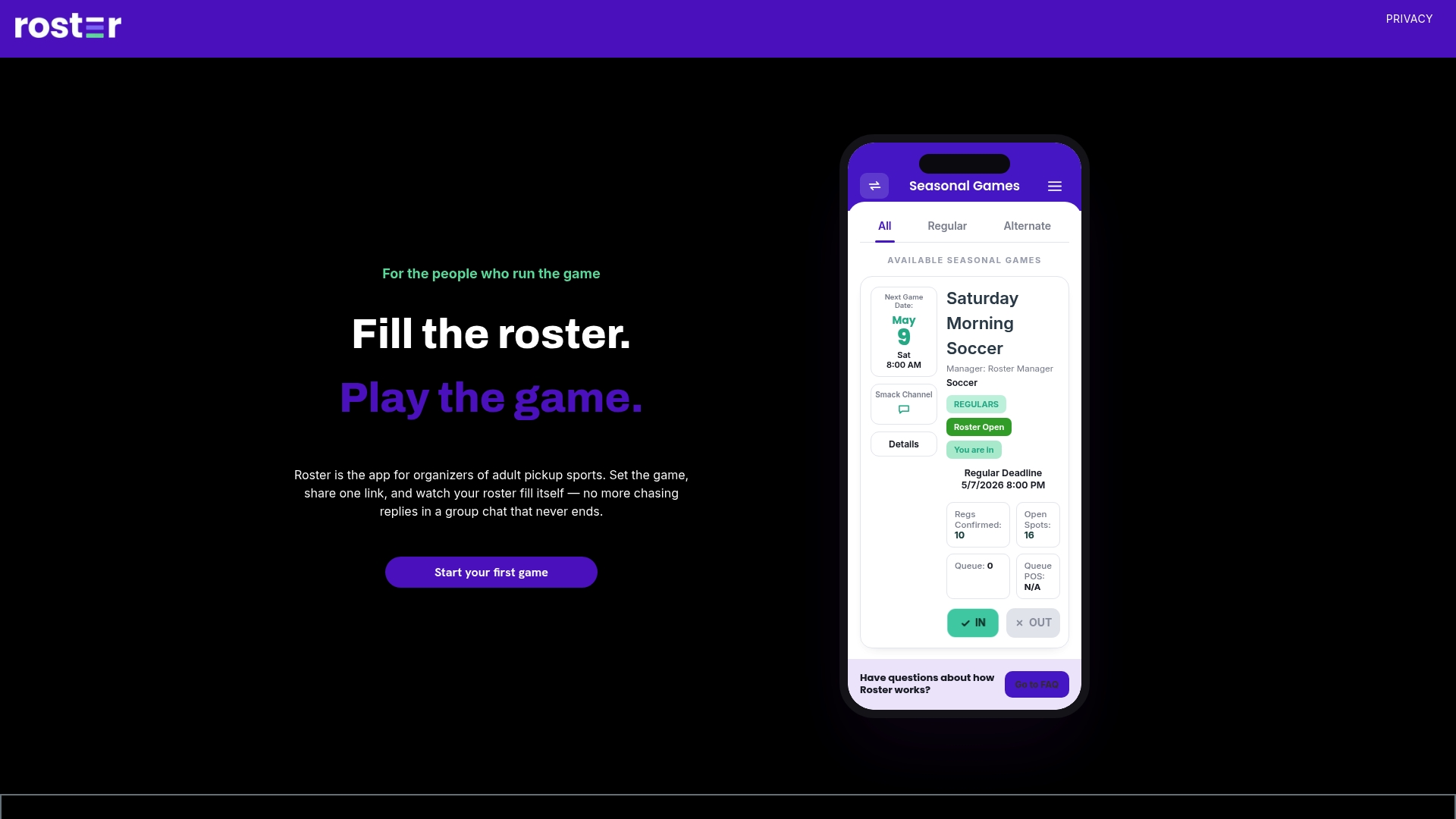
- A single shared signup link replaces chasing RSVPs across texts and group chats.
- Automated roster and waitlist handling fills open spots in real time as players drop.
- Peer-to-peer payment tracking keeps who-owes-what out of your head.
If you're juggling recurring games, a growing list of alternates, or repeated no-shows, check out our game management app to see how setup works.
FAQ
Is sports organizer burnout actually preventable?
Yes. Burnout follows predictable patterns tied to role ambiguity and task overload, both of which respond well to clearer role definitions, delegation, and automating repetitive signup work.
What are the earliest signs of organizer burnout?
The clearest early signs follow the WHO's burnout framework: persistent exhaustion, growing cynicism about the group or the process, and a dip in your confidence that you can fill the roster. Dropped messages and skipped games are common behavioral follow-ups.
How much time can I realistically save by delegating or automating tasks?
Research on collaboration overload found that people can reclaim 18 to 24% of their collaborative time by restructuring roles, schedules, and communication norms, a pattern that applies directly to volunteer organizing.
Does recognition from a club or league actually reduce burnout?
Yes. Studies on organizational and leadership support for volunteers found that recognition and task support act as buffers that sustain motivation even when the workload itself stays constant.
What does Roster cost for organizers?
Pricing for Roster is available on request through the app's own pages rather than listed as a flat public rate.
Sources
- Burn-out an "occupational phenomenon": International Classification of Diseases (WHO)
- Providing support for worker mental health | CDC
- A New Look at Job Demands, Resources, and Volunteers’ Intentions to Leave (Voluntas)
- PMC article on volunteer professionalization and administrative burden