
Create an ICE entry on every player's phone and post a short venue Emergency Action Plan sheet before anyone takes the field. That sheet should list 911, two emergency contacts per participant, the on-site official in charge, the venue manager, and directions to the nearest hospital. Post it near the phones and the AED, and share a copy in your organizer group chat so nobody hunts for numbers mid-crisis.
TL;DR:
- Collect identity, medical, insurance, and treatment consent details, plus two emergency contacts with multiple phone numbers; use checkboxes and keep the form to one page.
- Name an EAP coordinator and backup, assign who calls 911 and meets responders, and post the venue address, entrance, parking, and meeting point.
- Label contacts ICE, ICE1, and ICE2; watches and fitness apps usually message saved contacts or share locations, so someone present must call 911.
- During an emergency, assess scene safety, call 911 with access details, begin needed first aid, send someone to meet EMS, and notify contacts afterward.
- Review contact and medical details each season, and revisit the written plan annually or before events at unfamiliar or remote venues.
Table of Contents
- Essential Emergency-Contact Form Fields and Why They Matter
- Setting Emergency Contacts on Phones, Wearables, and Organizer Apps
- Building the Contacts Into an Emergency Action Plan With Local EMS
- The On-Site Communication Runbook for an Emergency
- Copy-Ready Templates for Organizers to Deploy Today
- A Practical View on Making Emergency Readiness Routine
- Collecting and Sharing Emergency Contacts Through Roster
- FAQ
- Sources
Essential Emergency-Contact Form Fields and Why They Matter
A usable contact form takes a few minutes to build and saves far more time when something goes wrong. Keep labels short, use dropdowns where you can, and group fields so a scanning responder or EMT can find what matters in seconds.
- Full name and date of birth: confirms identity and matches to insurance or medical records.
- Primary and secondary contact names with multiple phone numbers: covers the case where one contact doesn't answer.
- Medical details: allergies, medications, chronic conditions, concussion history, insurance provider and ID, and a physician's name and number.
- Consent and authority language: a line authorizing emergency medical treatment, with a signature and date, which pairs well with the consent and authorization wording organizers use for waivers.
- Access and logistics notes: anything a responder would need to know on sight, like a mobility aid or a service animal.
Keep the form to one page. A field nobody fills out correctly is worse than no field at all, so favor checkboxes and short dropdowns over open text wherever the answer has a limited set of options.
Pro Tip: Ask for two phone numbers per emergency contact, not one. A single unreachable number is the most common reason a notification gets delayed.

Setting Emergency Contacts on Phones, Wearables, and Organizer Apps
Most participants already carry a device that can speak for them if they can't. Setting it up correctly takes a few minutes per person.
- Label contacts "ICE," "ICE1," and "ICE2" in each phone's contact list. The CDC recommends this naming convention specifically because it lets first responders identify next of kin quickly, and hospitals aren't always obligated to track down family on their own if a patient arrives incapacitated.
- Turn on assistance contacts in watches and fitness apps, but know their limits: these features typically send a message or location ping to a saved contact, not a call to 911.
- Store an exported copy of your full contact list in a secure shared document and print a backup to keep in a binder at the venue.
- Give non-phone carriers a paper card with their ICE information, and ask everyone to keep phones unlocked or accessible during games rather than buried in a bag.
Building the Contacts Into an Emergency Action Plan With Local EMS
A contact list only works if it's wired into a plan with named roles. NATA's guidance on Emergency Action Plans calls for a written, venue-specific plan that assigns a coordinator, lists on-site responders, and is reviewed and practiced, not just filed away.
- Designate an EAP coordinator and at least one backup, and write down who calls 911 and who meets EMS at the gate.
- Post precise directions to the venue, including street address, gate or entrance, nearby cross-streets, parking, and the exact meeting point, both near the phones and saved in the caller's own phone.
- Run a short pre-event check: confirm the AED location, test that your comms channel works, confirm who has which role, and get a quick sign-off from anyone helping run the event.
- Review the plan annually, and again before any major or remote event where the usual venue setup doesn't apply.
Campus venues sometimes route calls to a local security dispatch rather than municipal 911, so it's worth confirming which number actually connects before game day.
Pro Tip: A five-minute pre-event briefing where everyone confirms their role cuts hesitation when an actual emergency starts.
The On-Site Communication Runbook for an Emergency
When something happens, the order of actions matters more than any single contact on the list. Keep this sequence short enough that someone under stress can follow it without reading instructions.
- Assess the scene for safety before approaching.
- Call 911 immediately and give the exact venue address, access notes, and the number and condition of those affected.
- Start first aid, CPR, or AED use as needed; NATA's cardiac arrest guidance notes that early defibrillation within minutes meaningfully improves outcomes.
- Send someone to meet EMS at the entrance and guide them in.
- Notify the emergency contacts on file once the scene is stable.
Assign a backup for every role ahead of time so one absence doesn't leave a gap. One person should record the time of the call, what interventions were given, and where the patient was transported. That record matters afterward, for the family and for anyone reviewing the response later.
Copy-Ready Templates for Organizers to Deploy Today
Building all of this from scratch is the part that stalls most organizers, so a few ready documents go a long way. A one-page communication checklist with copy-ready language covers the call-and-notify sequence above in a format you can tape to a medical kit. A one-page EAP template from a partner organization offers another practical layout if you want a second format to compare.
- Use a sample emergency contact form as your sign-up template, then collect responses through a single shared link instead of a paper stack.
- Print the venue EAP poster and tape it near the phones, the medical kit, and the AED.
- Export your contact list to CSV before every event and keep a printed copy in a binder as backup to the digital version.
A quick pre-event equipment check pairs well with this setup, including the lightning safety checklist many organizers run alongside their EAP.
A Practical View on Making Emergency Readiness Routine
The organizers who handle emergencies well aren't the ones with the longest plan. They're the ones who check the same short list before every game until it's automatic. Centralizing contacts once removes the scramble later, and that habit matters more than any document's length.
— Daniel
Collecting and Sharing Emergency Contacts Through Roster
We built Roster so collecting this information doesn't become another spreadsheet you manage by hand. Players sign up through a single shared link, and their contact and roster details land in one place instead of scattered across texts and group chats.
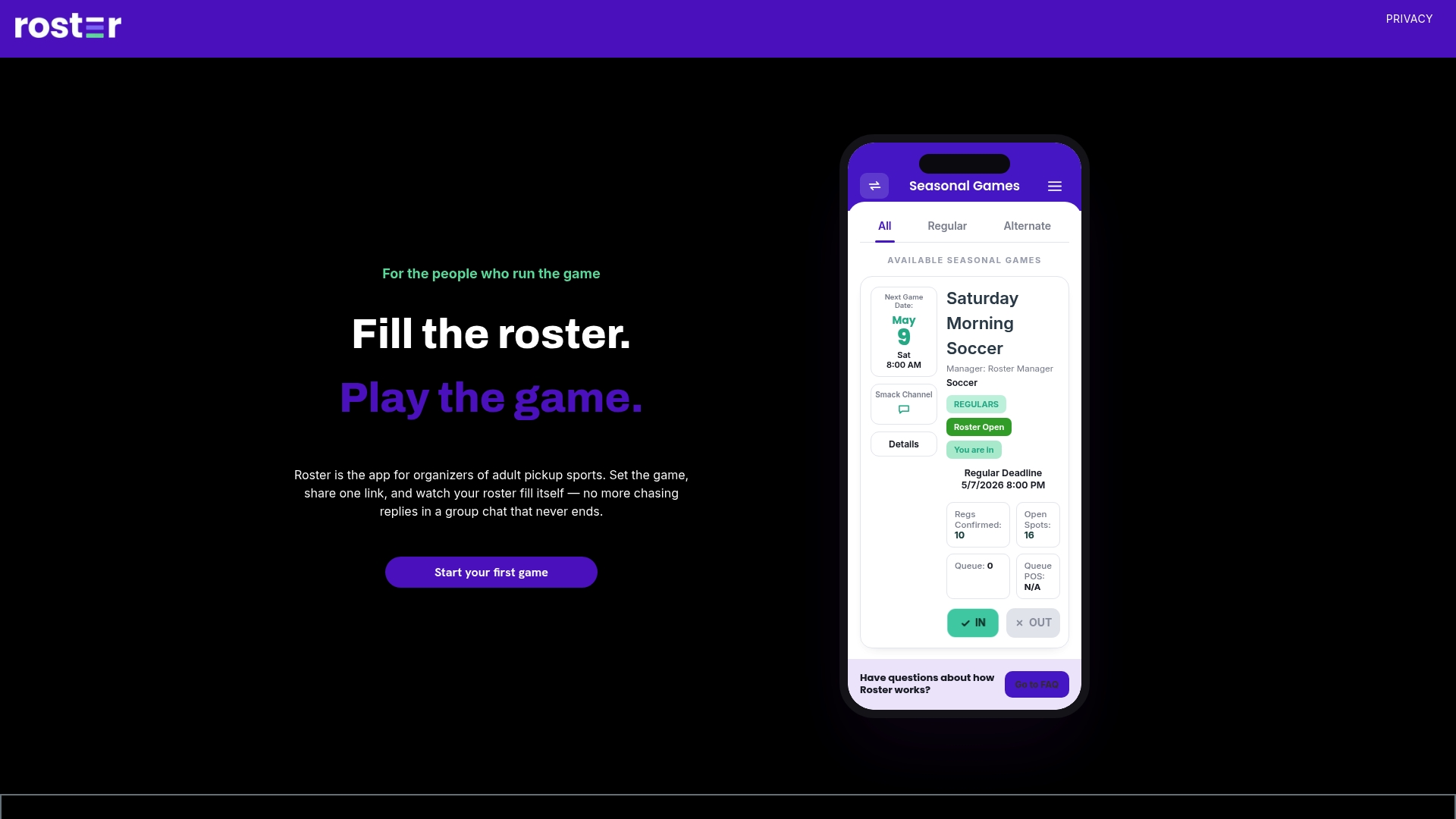
- A single sign-up link replaces the usual back-and-forth of tracking who responded.
- Contact lists can be exported for easy printing.
- The system helps manage waitlists to fill open spots efficiently.
If you're setting up for a season, start from our game management app and pair it with the one-page checklist above for a setup you can run in under thirty minutes.
FAQ
What should be included in a sports emergency contact list?
A usable list includes 911, two emergency contacts per participant with multiple phone numbers, the on-site official in charge, the venue manager, and directions to the nearest hospital. Pairing that with medical details like allergies and medications, as outlined in CDC incident response guidance, gives responders what they need without digging.
Why does the CDC recommend using "ICE" in phone contacts?
The CDC's ICE naming convention lets first responders quickly identify who to call if a patient can't speak for themselves. Labeling contacts "ICE," "ICE1," and "ICE2" avoids the delay of hospital staff searching a locked phone for clues.
Who should be responsible for calling 911 during a game?
A designated EAP coordinator and at least one backup should know in advance that this is their role, so the decision isn't made in the moment. NATA's EAP guidance recommends naming this role in writing well before any event.
How often should emergency contact information be updated?
Contact and medical details should be reviewed at least once a season and before any event at an unfamiliar venue. A quick annual review, consistent with NATA's recommendation to practice and update written plans, keeps the list from going stale.
Do wearables and fitness apps call 911 automatically in an emergency?
Most assistance features in watches and fitness apps send a message or location ping to a saved contact rather than calling emergency services directly. Someone on-site still needs to make the actual call to 911 and relay the venue's exact location.
Sources
- Emergency Action Plan Development and Implementation in Sport (NATA)
- In Case of Emergency (ICE) guidance (CDC/NIOSH)