
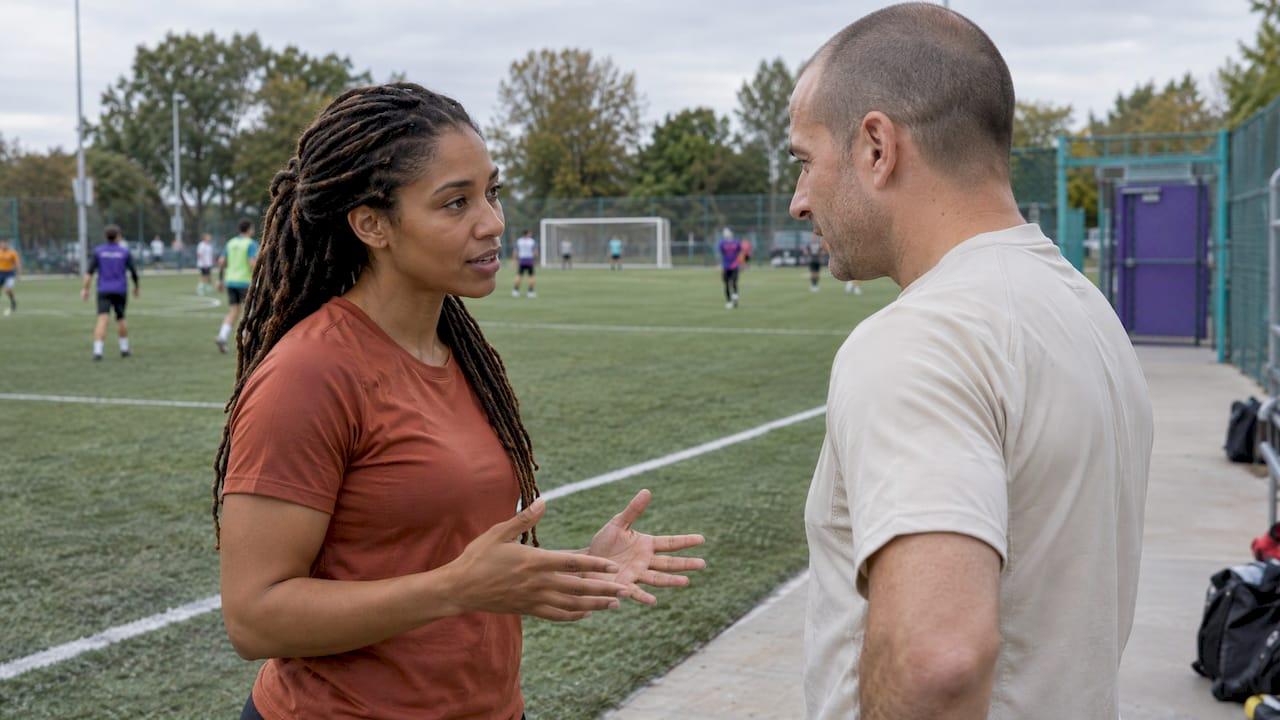
A trial players policy is a short written rule that tells newcomers how they can try your game before they join for good: how many games they get, what paperwork they sign, what you look at, and what happens afterward. The best ones fit on a single screen and live behind one link, so nobody has to scroll a 400-message group chat to learn whether Jordan's friend can play Thursday. Roster is built for exactly this job: you set the game details, share one link, and the app fills open spots in real time and builds a waitlist for dropouts.
Below is what real leagues and pickup groups put in their policies, what to copy, and a template you can adapt tonight.
TL;DR
- Give every trial player a fixed allowance, such as one free game or one week, so "just trying it out" never becomes an open-ended arrangement.
- Require a signed waiver (and any governing-body membership) before the first game, not after an injury.
- State the evaluation in plain terms: what you watch, how many games you watch, and who decides.
- Put trial players behind regulars in the signup order, and tell them where they stand on the roster or waitlist.
- Publish the policy in one place and send the same link to everyone.
Table of Contents
- What a trial players policy actually covers
- How other groups set the trial length
- Set evaluation criteria people can read in thirty seconds
- Waivers, membership and safety come first
- Attendance and conduct expectations
- Roster spots, waitlists and who gets priority
- Tell trial players the outcome
- A trial players policy you can copy
- Our perspective
- Run trials without the group chat
- FAQ
- Sources
What a trial players policy actually covers
If you searched this phrase and landed on NBA stories, that is a different animal. The league's Player Participation Policy is about keeping healthy stars on the court for fans, which is unrelated to how a community game screens newcomers. For an adult recreational or pickup group, a trial policy answers five questions:
- Who can try? Age minimums, skill range, membership requirements.
- How long is the trial? One game, one week, two games.
- What do you evaluate? Level of play, attendance, conduct.
- What paperwork is needed? Waiver, insurance, registration.
- What happens next? Roster spot, waitlist, a move to another level, or a thank-you and an invitation to come back.
Every example below answers some or all of these. Together they show a pattern worth copying.
How other groups set the trial length
The trial is the heart of the policy, and it is usually short.
- Prescott Pickleball gives evaluation players a one-week trial assessed over at least five games.
- Pickup Soccer NYC invites brand-new players to one free trial game after they sign a waiver. To play more, they register online.
- A women's soccer association in Canada, the CWSA, lets eligible new players try a team for their first two league games, with either side able to request removal through the league office. It limits use of the policy to two times per season and shuts it off after the transfer deadline.
- DiscNY's beginner pickup offers a single first-time trial session that needs only a signed waiver. Full registration is required to return.
The common thread: a number, a limit, and a clear next step. Pick the shortest trial that lets you make a fair call. For a weekly pickup soccer game, one game is usually enough to see whether someone fits the group. For a ranked or skill-tiered format, you need several games to see a pattern.
Set evaluation criteria people can read in thirty seconds
Players get frustrated when a decision feels personal. Writing the criteria down turns "we'll let you know" into a rule everyone can see.
Prescott Pickleball is a good model for a skill-tiered game. Its trial is judged on scoring average across at least five games: an average of 7.0 to 9.7 makes the player eligible for the roster, below 7.0 moves them down a level, and 9.7 or above moves them up. The club also accepts several ways to place someone, including a self-rating against the USAP Player Skills Ratings rubric, an instructor evaluation, or an outside rating such as DUPR. If you run pickleball, our guide to player skill ratings walks through how organizers use them.
A skill number is not always what you need. Many casual groups care more about fit. One adult soccer league operator notes that its recreational divisions emphasize participation, steady flow and shared playing time, with effort mattering more than polish. If that is your group, say so. Your criteria might be:
- Shows up on time and tells you when plans change.
- Plays at a level close to the rest of the group.
- Passes the ball, shares time and keeps the language respectful.
Three criteria are plenty. If you cannot explain a criterion in one sentence, newcomers will not understand it either.
Tell trial players what to say
Newcomers also help themselves when they speak up. The same soccer operator suggests telling the captain directly what you need, something like "I'm new, put me somewhere simple and I'll work," and notes that most teams respect that. Put that line in your welcome message. It lowers the pressure on the newcomer and gives your organizer a cue for where to place them.
Waivers, membership and safety come first
This is the part of a trial policy that you do not want to improvise. Whoever steps on the field is taking on physical risk, and organizers who ask for paperwork after the first game are asking too late.
- Pickup Soccer NYC requires a signed liability waiver for the free trial game. Its release says the organizer assumes no risk or liability for injuries, and players state that they are in good health and take personal responsibility for physical and accidental risks.
- The Sno-King Adult Hockey League requires all players to be 18+, hold a current USA Hockey membership, register with the league, and sign an annual waiver and release.
- Triangle Ultimate requires pickup players to be rostered in a league or, if unregistered, to join its pickup list and hold a USA Ultimate membership, with requirements met before play and 24 hours' notice before a first pickup.
- DiscNY's trial needs only a waiver, while returning requires full registration, including a $20 USAU affiliate membership for insurance.
If your sport has a national governing body, check whether it requires membership or provides insurance for the format you run, and say so in the policy. Waiver wording differs by state and by activity, so have the form itself reviewed by a lawyer licensed where you play. Our guide to pickup game waivers covers what organizers need and how to collect signatures.
Inclusion belongs in this section too. Some leagues state outright that there are no tryouts and everyone is welcome regardless of ability, while others, like DiscNY, ask players to report unsafe interactions to commissioners and point to a grievance policy. Whichever tone fits your group, write down who to contact if something goes wrong.
Attendance and conduct expectations
A trial player who vanishes after saying yes costs you a roster spot someone else wanted. State your expectations in advance, in plain words.
Prescott Pickleball asks players to cancel online at least 24 hours ahead, and late cancellations or two no-shows in four weeks can mean removal from invitations for four weeks. Pickup Soccer NYC states it does not tolerate disrespectful language, behavior or play.

Hold trial players to the same rule you hold everyone else to. If you charge regulars for no-shows, say how that applies to newcomers; our piece on a no-show fee policy shows how organizers keep games full, and the six-step RSVP checklist covers the signup side. For more on the problem itself, see how to reduce sports no-shows.
Roster spots, waitlists and who gets priority
Trial players create the most arguments when spots are tight. Settle the order before it matters.
Here is how some organizations handle placement:
| Group | How newcomers are placed |
|---|---|
| Chico Area Recreation & Park District | First-come, first-served; a waitlist starts once leagues are full; roster changes allowed by managers through week four, then an approved Add/Drop Form is needed |
| Houston Sports & Social Club | No tryouts; free agents mostly placed with other free agents; waitlisting is free and the club contacts players when a spot opens |
| Skatetown hockey leagues | Free agent form does not guarantee a spot; players who sign up below their level may be asked to move up a division |
| Triangle Ultimate | A pickup player joins the recruiting team only if its need is equal to or greater than the other team's, based on actual attendance |
| Virginia Tech intramurals | Waitlist by order of registration and meeting the roster minimum; open spots filled in list order |
Two lessons stand out. First, order must be visible: first come, first served is easy to defend because anyone can check it. Second, adding players off the books can be costly in organized leagues. The Kraken Hockey League penalizes teams that add players without prior written approval, up to forfeits or expulsion. Your pickup game does not need penalties that heavy, but it does need one place where the roster lives.
If you let regulars bring friends, cap it. Our guide on how to cap guests per player explains how, so trial spots do not get eaten by plus-ones.
Tell trial players the outcome
Silence is the worst message. After the trial, one of four things happens, and each deserves a sentence:
- You're in. Here is how to sign up for the season.
- Stay as a sub. You are on the alternates list and will be offered open spots.
- Try a different level. Here is the group that fits better.
- Not this time. Here is why, and when you can try again.
Some leagues soften the downside. Houston Sports & Social Club's Second Chance Guarantee moves a first-time free agent who attended at least three games and reports issues before week four to a different team the next season, with that experience free. You do not need a guarantee, but offering a path forward keeps good people in your community. For more on building a group that lasts, read our post on building an adult sports community.
A trial players policy you can copy
Adapt the numbers to your sport:
Trial players. New players may attend one trial game at no obligation. Before playing, sign the waiver at the link below. Sign up through the game link like everyone else; regulars have priority, and trial players fill open spots or join the waitlist. Cancel at least 24 hours ahead if you cannot come. After your trial, we will message you within two days to let you know whether you are in for the season, on the alternates list, or a better fit for a different group. To keep playing, register for the season.
That is about 100 words, it answers all five questions, and it can be pasted into a game description or pinned in a chat. Then include a good invite message; our post on game invite message elements shows what fills rosters.
Our perspective
Most organizers do not have a trial policy problem. They have a scattered-information problem. The rule exists in someone's head, the roster exists in a spreadsheet, and the waitlist exists in a thread that scrolled away on Tuesday.
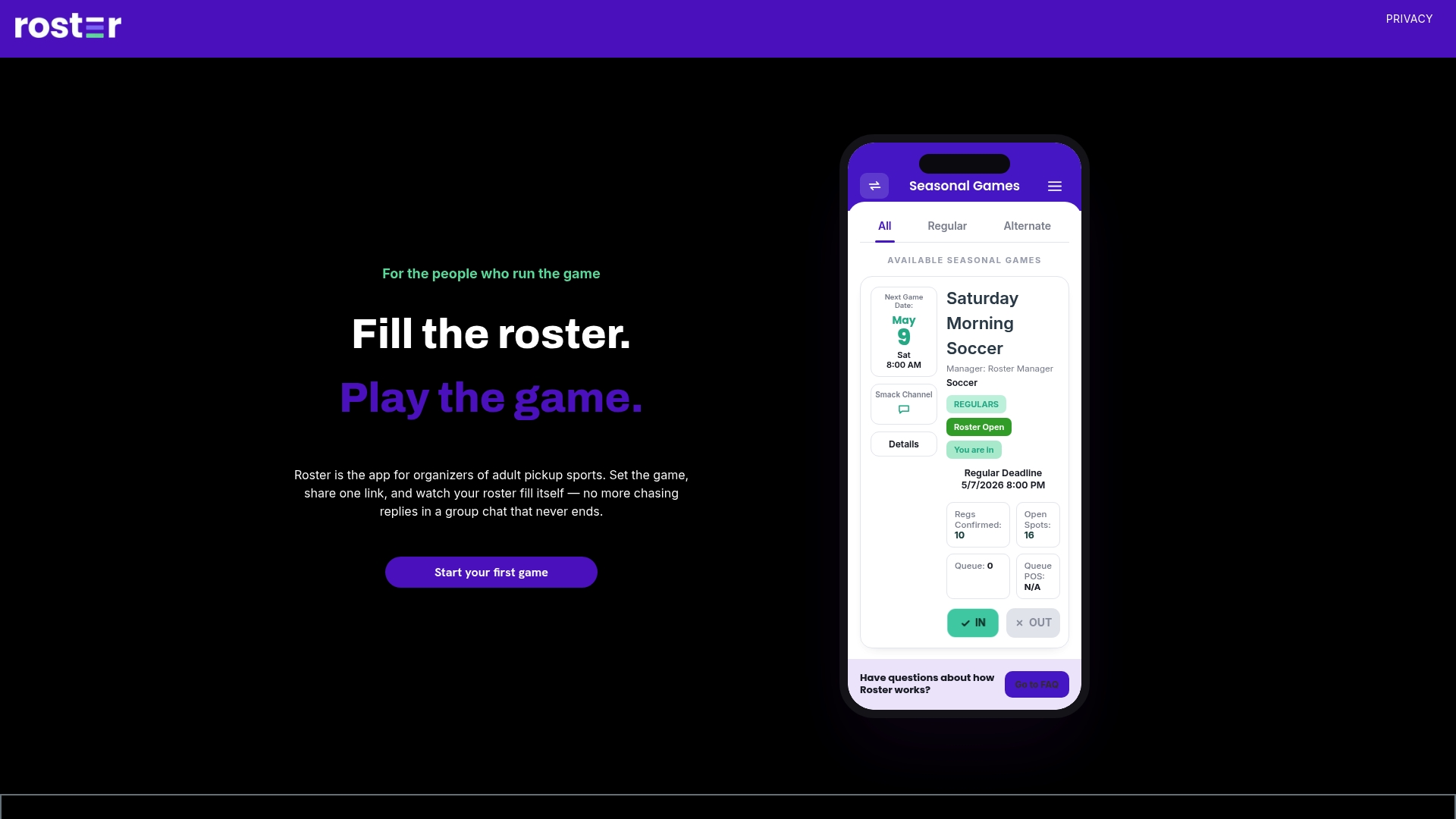
We built Roster around the idea that an organizer should set the game details once, share a single link, and let the app handle the tracking. Regulars and alternates are different kinds of spots, so a newcomer sees exactly where they stand. When someone drops, the next person on the waitlist is offered the opening, and the organizer does not have to chase anyone.
A good policy is only as good as its visibility. Put the rule on the same link where people sign up and you will rarely have to explain it twice. Then spend your time on the part you started organizing for: playing.
Daniel
Run trials without the group chat
Roster is a mobile app for adult pickup organizers. It automates game and season scheduling, manages real-time signups for regulars and alternates, tracks roster spots and waitlists, supports group chat, and tracks Venmo payments between players and managers. With one shared link, a trial player can see the game and sign up, and you no longer track RSVPs by hand. See how Roster works.
FAQ
How long should a trial last?
One game works for most casual pickup groups. Skill-tiered formats often need more: Prescott Pickleball assesses newcomers over at least five games in one week. Choose the shortest period that lets you judge fit, and state it in writing.
Do trial players need to sign a waiver?
Yes, before they take part. Groups such as Pickup Soccer NYC and DiscNY require a signed waiver even for a single free trial session. Have the form reviewed by a lawyer licensed in your state, since wording and enforceability vary.
Should trial players get priority over regulars?
Usually not. Regulars have committed to the season, so most groups seat them first and let trial players fill open spots or join the waitlist. Publishing that order in the signup link prevents most disputes.
What if a trial player is far better or worse than the group?
Offer a move to a better-matched level rather than a flat no. Skatetown, for example, may ask players who sign up below their skill level to move up a division, and Prescott Pickleball moves players up or down based on results. Explain the reason so it does not feel personal.
Is this the same as the NBA's player participation policy?
No. The NBA policy governs when healthy stars may rest, while a trial players policy for a community game governs how newcomers try your game and join the roster.
Sources
- NBA: Adam Silver discusses new Player Participation Policy
- Prescott Pickleball: Round Robin Rules
- Pickup Soccer NYC: Trial game and player waiver
- CWSA New Player Trial Policy
- DiscNY: Brooklyn Beginner Ultimate Pickup
- MiLife Sports: What to expect in your first adult soccer league game
- Sno-King Adult Hockey League Player Handbook
- Triangle Ultimate: Pickup Player Policies
- Pride Sports USA FAQs
- Chico Area Recreation & Park District: Adult Sports FAQ
- Houston Sports & Social Club FAQs
- Skatetown Hockey League FAQs
- Virginia Tech Intramural Sports Policy Manual 2026-27
- Kraken Hockey League Guidelines and Rules